
7 Inch 1024x600 Capacitive Touch Screen | Industrial Grade
News
Mar-12-2026
Ever wondered why the 7 inch capacitive touch screen 1024x600 has become the "gold standard" for industrial designers and DIY engineers alike? It isn't just a random choice of dimensions. This specific resolution and size offer the perfect balance of pixel density and screen real estate for modern high-definition interfaces. Whether you’re building a medical diagnostic tool or a smart home control hub, you’ve likely found that smaller screens feel cramped, while larger ones drive up your bill of materials (BOM) costs.
Choosing the right display isn’t just about the specs on a datasheet. It's about how that screen performs in a humid hospital ward, a dusty factory floor, or under the glare of direct sunlight. Most off-the-shelf options you find on hobbyist sites like Waveshare or Amazon are great for a weekend Raspberry Pi project, but they often fall short in high-stakes professional environments.
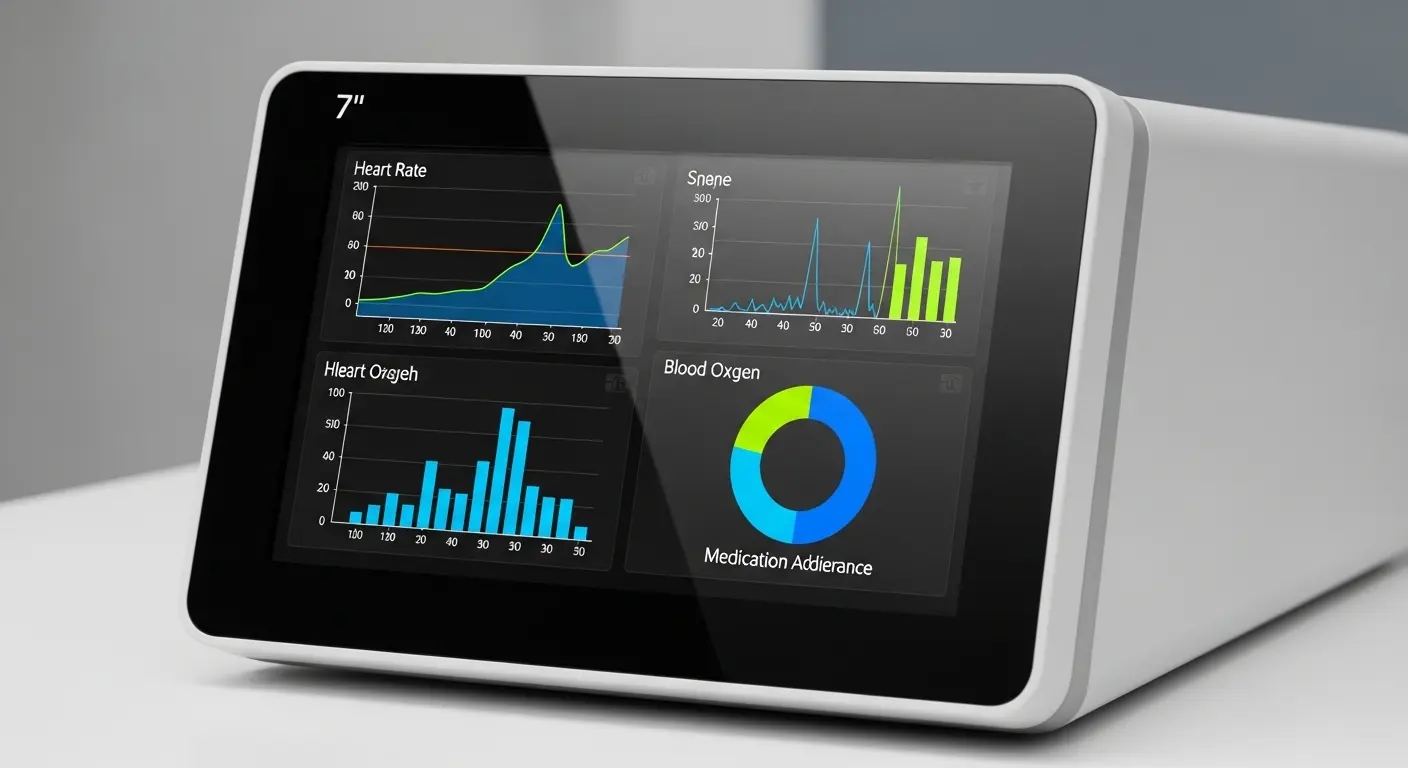
In this guide, we'll break down everything you need to know about the 7-inch 1024x600 display ecosystem. We’ll look at the technical differences that matter, how to customize these units for specific industries, and why sourcing from an industrial-grade manufacturer like Shenzhen Wanty makes all the difference for your product’s longevity.
Technical Breakdown: Why 1024x600 Matters
When you're evaluating a 7 inch capacitive touch screen 1024x600, the resolution is your first point of contact. Many older 7-inch modules used an 800x480 resolution. While functional, that resolution often results in "pixelated" text and icons that look dated compared to modern smartphone standards.
Specifically, the 1024x600 resolution provides a 16:9 aspect ratio that aligns perfectly with modern UI frameworks like Qt, LVGL, or Android. This means you don't have to awkwardly scale your graphics or deal with "letterboxing." Moreover, the pixel density is high enough to show fine details in medical imaging or complex industrial schematics without needing a bulky 10-inch monitor.
| Feature | Industrial Specification (Typical) | Consumer/Hobbyist Grade |
| Panel Type | IPS (Full Viewing Angle) | TN (Narrow Viewing Angle) |
| Brightness | 500 – 1100+ Nits | 250 – 350 Nits |
| Operating Temp | -20°C to +70°C | 0°C to +50°C |
| Touch Technology | PCAP (Projected Capacitive) | Resistive or Basic PCAP |
| Interface | LVDS / MIPI / RGB | HDMI / USB |
| Durability | IK07 - IK10 Rated Glass | Non-rated standard glass |
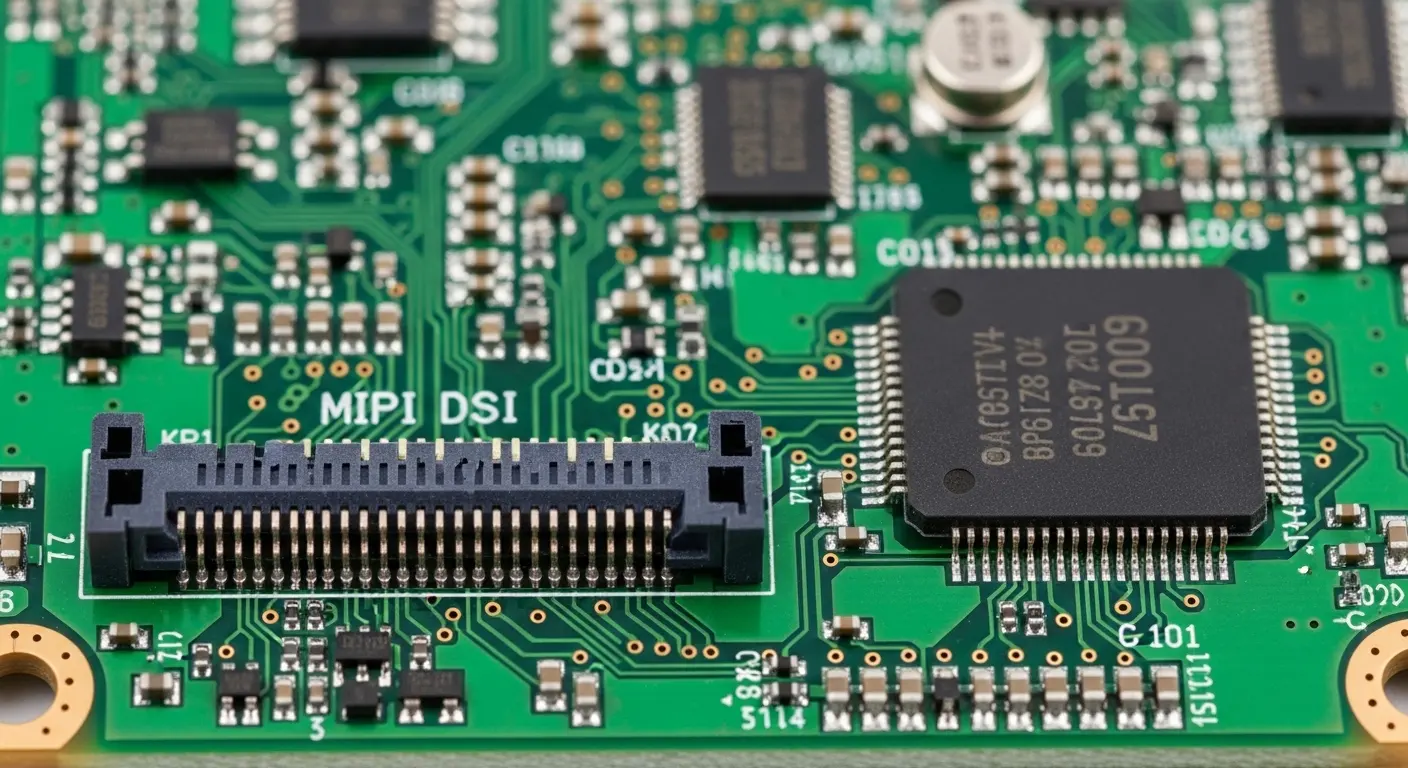
The Great Interface Debate: MIPI vs. LVDS vs. RGB
Selecting your display interface is a critical design decision that affects both your PCB complexity and your power consumption. For a 7 inch LCD display, you generally have three main choices:
1. LVDS (Low-Voltage Differential Signaling)
LVDS is the workhorse of the industrial world. It uses differential signaling to reduce electromagnetic interference (EMI), which is vital in medical and automotive settings where signal integrity is everything. Specifically, LVDS allows for longer cable runs between the controller and the screen, making it ideal for larger machinery where the "brain" of the device might not be directly behind the glass.
2. MIPI DSI (Mobile Industry Processor Interface)
If you're building a handheld or battery-powered device, MIPI is often the better choice. It uses fewer pins and consumes significantly less power than LVDS. Because it's a high-speed serial interface, it can handle high-resolution graphics with ease. However, MIPI can be more sensitive to electrical noise, so your shielding must be top-notch.
3. RGB Parallel
This is the "old school" method. It’s cheap and simple to implement for microcontrollers that don't have dedicated MIPI or LVDS hardware. However, it requires a lot of pins (usually 40 or more), which can make your PCB layout a nightmare. We typically recommend RGB only for low-cost, low-refresh-rate applications.
Industrial Grade vs. Consumer Grade: What’s the Catch?
You might see a 7-inch screen on a marketplace for $25 and wonder why an industrial 7 inch capacitive touch screen LCD costs more. The difference lies in the "hidden" specs.
Consumer screens are designed for indoor use at room temperature. If you put one in a forklift dashboard that sits outside in the winter or a sterilization unit that gets hot, the liquid crystals will "pool" or the touch sensor will drift. Industrial modules are built with "Wide Temperature" components that operate reliably from -20°C up to +70°C.
Furthermore, there's the issue of longevity. Consumer electronics change every six months. If you’re a medical device manufacturer, you need to know that you can buy the exact same screen five or ten years from now. At Wanty, we offer a long-term supply guarantee, so you don't have to redesign your housing every time a supplier decides to discontinue a panel.
Customization: Making the Screen Your Own
Standard screens are rarely a perfect fit for a finished product. That's where customization comes in. As a specialized custom projected capacitive and resistive touch screen distributor, we help engineers modify the hardware to survive specific environments.
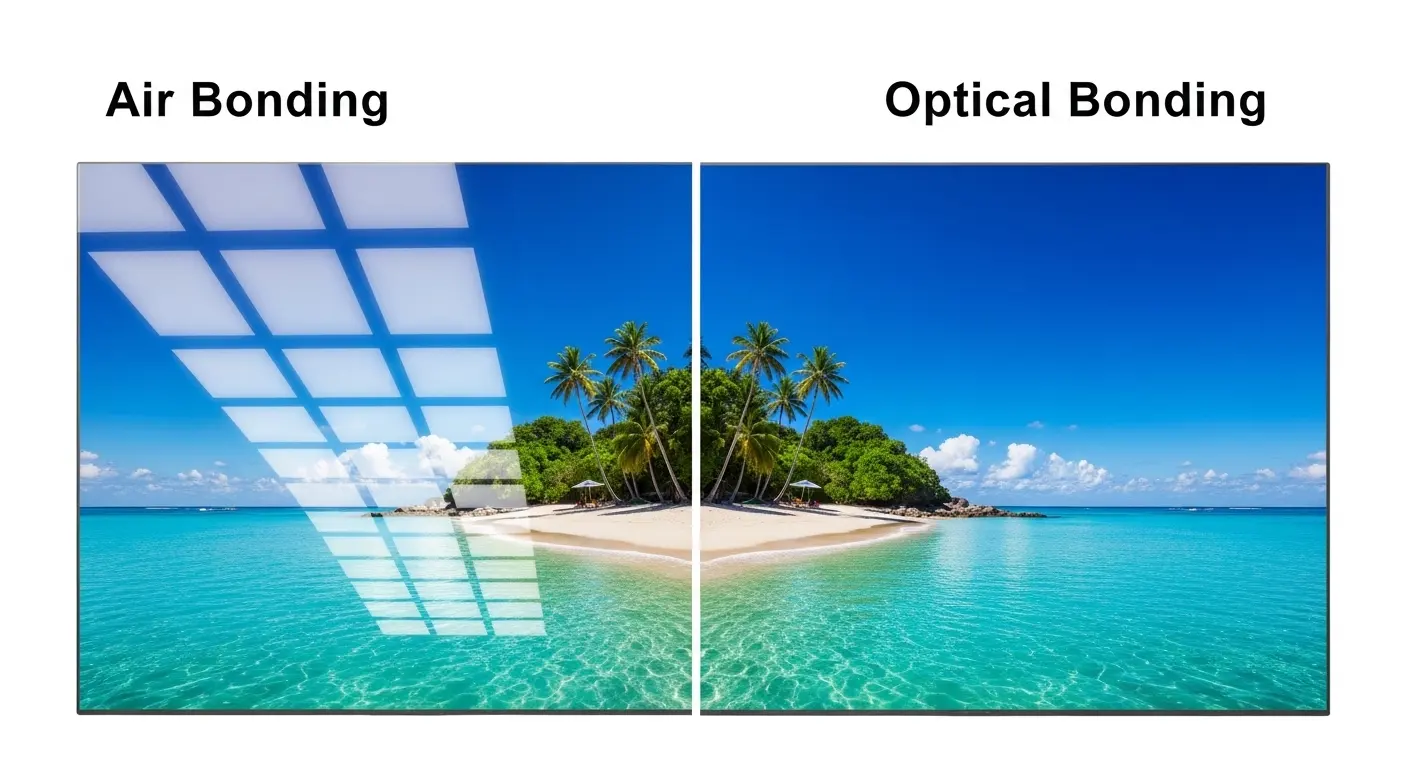
Optical Bonding (OCA/OCR)
Standard screens have a small air gap between the LCD and the touch glass. This gap causes internal reflections, making the screen hard to read in sunlight. Optical bonding fills that gap with a clear resin. The result? Better contrast, higher durability, and no "fogging" in humid environments.
Specialized Coatings
- AG (Anti-Glare): This scatters light to reduce reflections. It's a must-have for outdoor kiosks or bright hospital rooms.
- AR (Anti-Reflective): Unlike AG, which can make the screen look slightly "matte," AR coatings use destructive interference to cancel out reflections while keeping the display crisp and clear.
- AF (Anti-Fingerprint): An oleophobic layer that prevents oils from your skin from smudging the glass. It makes the screen easier to clean and much smoother to the touch.
Custom Cover Glass
Want your company logo printed directly on the glass? Need the glass to be 3mm thick to withstand a hammer blow (IK10 rating)? We can customize the shape, thickness, and printing of the top glass layer to match your product's branding and safety requirements.
Application Scenarios: Where These Screens Excel
The 7 inch capacitive touch screen 1024x600 isn't a one-trick pony. It’s currently the dominant choice in several high-growth sectors:
1. Medical Diagnostics & Patient Monitoring In a medical setting, accuracy is literal life or death. These screens are often paired with IPS panels because they offer 178-degree viewing angles. This means a nurse can see the patient's vitals clearly even if they aren't standing directly in front of the monitor. Additionally, our 7 inch capacitive touch panel can be tuned to work with medical gloves and through liquid spills.
2. Smart Home & Building Automation Whether it’s a security keypad or a thermostat, the 7-inch form factor is small enough to be unobtrusive but large enough to display complex menus. For these applications, we often recommend the 7 inch 1024x600 IPS HDMI USB touch display because it allows for rapid prototyping using Linux or Android-based controllers.
3. Industrial HMI (Human-Machine Interface) Factory floors are noisy—electronically speaking. Motors and high-voltage lines create massive EMI. Industrial 7-inch screens feature enhanced shielding on the FPC (Flexible Printed Circuit) and the controller IC to prevent "ghost touches" or screen flickering.
The Challenges of Integration (And How to Solve Them)
Integrating a touch screen into a metal enclosure often leads to two problems: EMI and ESD.
Electromagnetic Interference (EMI): The touch sensor itself acts like a tiny antenna. If your enclosure isn't properly grounded, the screen might think you're touching it when you aren't. We solve this by adding EMI shielding layers to the touch panel and using high-quality controller ICs (like those from Goodix or FocalTech) that have built-in noise filtering.
Electrostatic Discharge (ESD): In dry environments, a person walking across a carpet can carry a huge static charge. When they touch the screen, that charge can fry the controller. Industrial screens include ESD protection circuits that can withstand up to 15kV, ensuring your device doesn't die the first time a customer touches it.
Why Source from Wanty?
When you choose Shenzhen Wanty, you aren't just buying a component; you're gaining a manufacturing partner. We operate a 20,000㎡ ISO9001 certified facility, meaning our quality control is rigorous and repeatable.
Unlike many suppliers who simply "flip" panels from larger factories, we handle the integration and customization in-house. This gives us total control over the optical bonding process and the final testing of the touch sensitivity. If your project requires a specific nit-brightness for outdoor use or a custom FPC length to fit a tight chassis, our engineering team works directly with you to make it happen.
Frequently Asked Questions (FAQ)
Q: Does this 7-inch screen support 10-point multi-touch?
A: Yes. Most modern 1024x600 capacitive panels support 5 to 10 points of simultaneous touch, allowing for gestures like pinch-to-zoom and rotating objects in your UI.
Q: Can I use this screen with a Raspberry Pi?
A: Absolutely. While we focus on industrial OEMs, our 7 inch 1024x600 IPS HDMI USB touch display is natively compatible with Raspberry Pi, Windows, and Linux via standard HDMI and USB connections.
Q: Is the 1024x600 resolution better than 800x480?
A: For modern applications, yes. It provides about 60% more pixels, which makes your text sharper and allows you to display more data on the screen at once without cluttering the interface.
Q: Can the screen work through a 5mm thick protective glass?
A: Yes, we can tune the sensitivity of the PCAP controller to penetrate thick glass, which is often required for vandal-proof outdoor kiosks or rugged handhelds.
Q: What is the typical lead time for a custom sample?
A: For standard product modifications, we can usually provide samples within 2-3 weeks. Full custom glass and FPC designs typically take 4-6 weeks for tooling and prototyping.
Final Thoughts on Choosing the Right Display
Don't settle for a "good enough" screen that will fail in the field. The 7 inch capacitive touch screen 1024x600 is a powerful tool when specified correctly. By focusing on industrial-grade specs like IPS panels, wide temperature ranges, and optical bonding, you ensure your product remains a premium experience for its entire lifecycle.
Related Topics

Industrial Touch Display Technology Trends in the Era of Industry 4.0
Aug-07-2026

Touch Panel Selection Guide for Industrial, Outdoor, and Commercial Applications
Aug-07-2026

How to Choose the Right Touch Display Solution for Your Project
Aug-07-2026

How to Choose an Industrial Capacitive Touch Screen: 2026 Guide
Aug-07-2026
Get a Free Quote
✔ 16 Years Manufacture Service ★★★★★
✔ 3 Technical Experts And 52+ Project Engineers Will Assiste You
✔ Wanty Employs Over 52 Engineers, Many Of Whom Come From Leading Tft Lcd Module Companies Such As Tianma And Boe-Varitronix. Each Core Team Member Brings 15 Years Of Industry Experience.
✔ If you would like more information about our products and services, please contact us. Whether you need a standard solution or a customized one, we are here to meet your needs.
✔ Please complete the form below, and the selected location will contact you promptly. Thank you for visiting, and have a great day!
