
Best Embedded Capacitive Touch Solution for Industrial Integration
News
Mar-13-2026
An embedded capacitive touch solution is the primary interface used in high-performance industrial, medical, and commercial hardware. Unlike consumer-grade tablets, these solutions are designed to be integrated directly into a device’s chassis or enclosure. This technology allows for a seamless, bezel-free user experience while maintaining the durability required for 24/7 operation.
Engineers must prioritize three main factors when selecting a touch system: electrical compatibility, mechanical mounting, and environmental durability. A failure in any of these areas can lead to "ghost touches" or total system failure. This guide provides a deep technical analysis of how to choose, integrate, and optimize these touch systems for professional applications.
What defines a complete embedded capacitive touch solution?
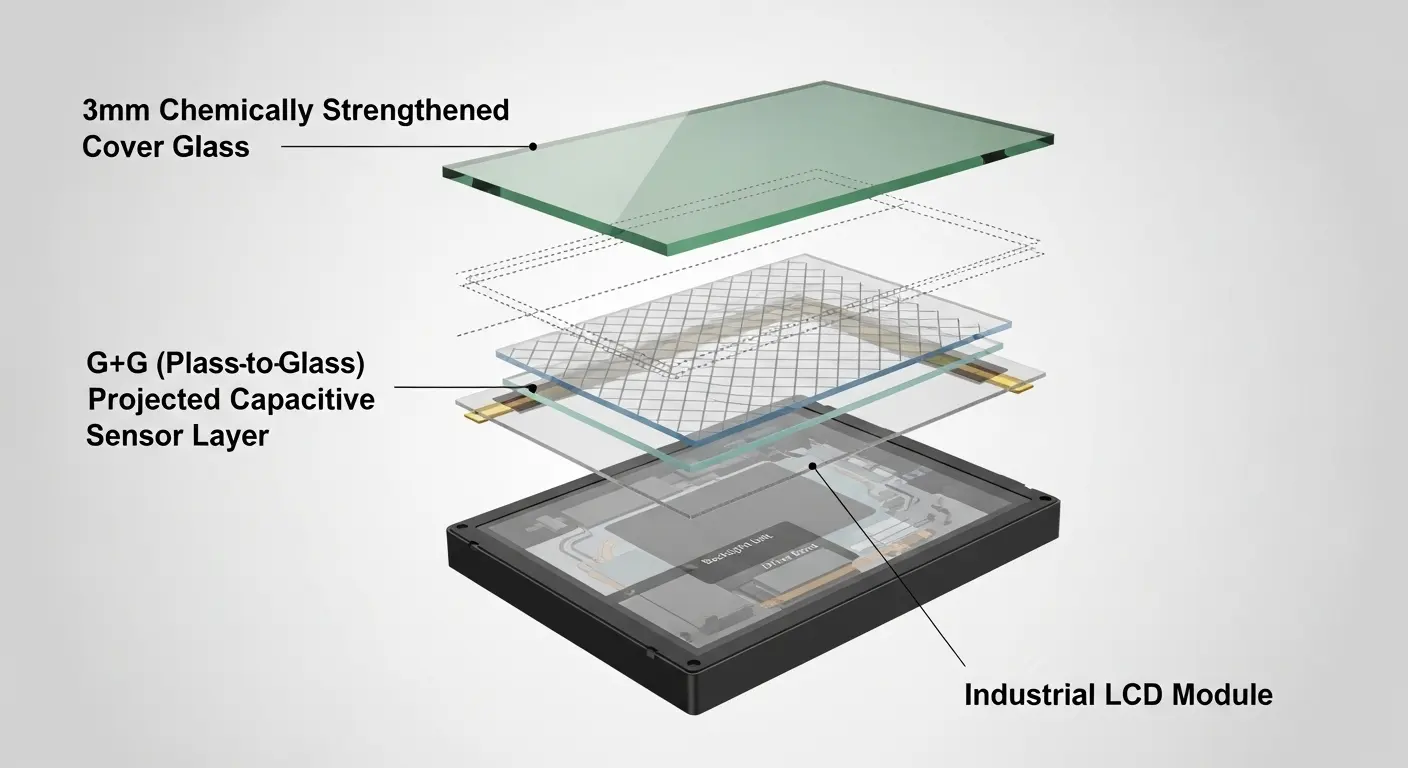
A complete embedded capacitive touch solution consists of a Projected Capacitive (PCAP) sensor, a high-performance controller IC, and a custom cover lens. These components work together to detect minute changes in capacitance caused by a human finger or a conductive stylus.
The Sensor Stack: G+G vs. G+F Structures
The physical construction of the sensor, known as the "stack-up," determines the optical clarity and physical robustness of the device. Most industrial engineers prefer a Glass-on-Glass (G+G) structure. In this design, the Indium Tin Oxide (ITO) sensor layer is sandwiched between two layers of glass.
G+G structures offer superior stability in high-temperature environments. Alternatively, some lightweight applications utilize Glass-on-Film (G+F) structures. These are thinner and more cost-effective but may lack the extreme durability required for heavy machinery. Your choice of stack-up will dictate the capacitive touchscreen manufacturing process used for your specific project.
The Role of the Cover Lens and Surface Treatments
The cover lens is the outermost layer and acts as the primary shield for the internal electronics. It is typically made from chemically strengthened glass, such as Gorilla Glass or Soda-Lime glass. This layer can be customized with various coatings to improve usability in difficult lighting conditions.
Common treatments include Anti-Glare (AG), Anti-Reflective (AR), and Anti-Fingerprint (AF) coatings. For example, an AG coating is essential for outdoor kiosks to prevent sunlight from washing out the display. These treatments ensure the capacitive touch panel remains readable and responsive regardless of the external environment.
Integration with the LCD Module
The final step in a touch solution is the mating of the sensor to the LCD. This is usually done through perimeter bonding or full optical bonding. Precise alignment is necessary to prevent parallax errors, where the visual icon on the screen does not line up with the physical touch point. Proper integration ensures a high-quality user experience and long-term mechanical reliability.
Selecting the right interface: I2C vs. USB for embedded systems
The communication interface determines how the touch controller sends data to the host processor. For a professional embedded capacitive touch solution, the choice usually falls between I2C (Inter-Integrated Circuit) and USB-HID (Human Interface Device).
| Feature | I2C (Inter-Integrated Circuit) | USB-HID (Human Interface Device) |
| Primary Use Case | ARM/Linux Embedded Boards | Windows/Intel-based Systems |
| Pin Count | Low (4-6 pins) | Standard USB Connector |
| Driver Support | Requires Custom Integration | Plug-and-Play |
| Max Distance | Short (under 10 inches) | Long (up to 5 meters) |
Advantages of the I2C Interface
I2C is the standard choice for compact embedded systems running on microcontrollers or ARM-based processors. This interface uses very few pins, which simplifies the PCB design and reduces power consumption. Because it communicates directly with the processor’s bus, it often has lower latency than USB.
However, I2C requires more software expertise. Developers must write or configure specific drivers for the operating system. Furthermore, signal integrity can be an issue if the cable between the capacitive touch panel and the board is too long. In our experience, I2C is best suited for integrated handheld devices where space is at a premium.
Benefits of USB-HID Integration
USB-HID is the preferred interface for larger industrial PCs and kiosks. It is a "Plug-and-Play" solution, meaning most modern operating systems recognize the touch screen immediately without additional drivers. This significantly reduces the time required for software development and system testing.
USB cables are also more robust and can carry signals over much longer distances than I2C. This makes USB the ideal choice for modular designs where the touch screen and the computer are housed in different sections of the enclosure. For many industrial capacitive touchscreen applications, the convenience of USB outweighs the slight increase in power usage.
Choosing Based on System Architecture
The decision often depends on your host processor. If you are using a Windows-based industrial PC, USB is the logical choice. If you are developing a custom Linux-based IoT device, I2C offers a more integrated and power-efficient path. Always verify that your chosen interface supports the number of simultaneous touch points required for your application.
How to prevent EMI and noise in embedded touch integration?
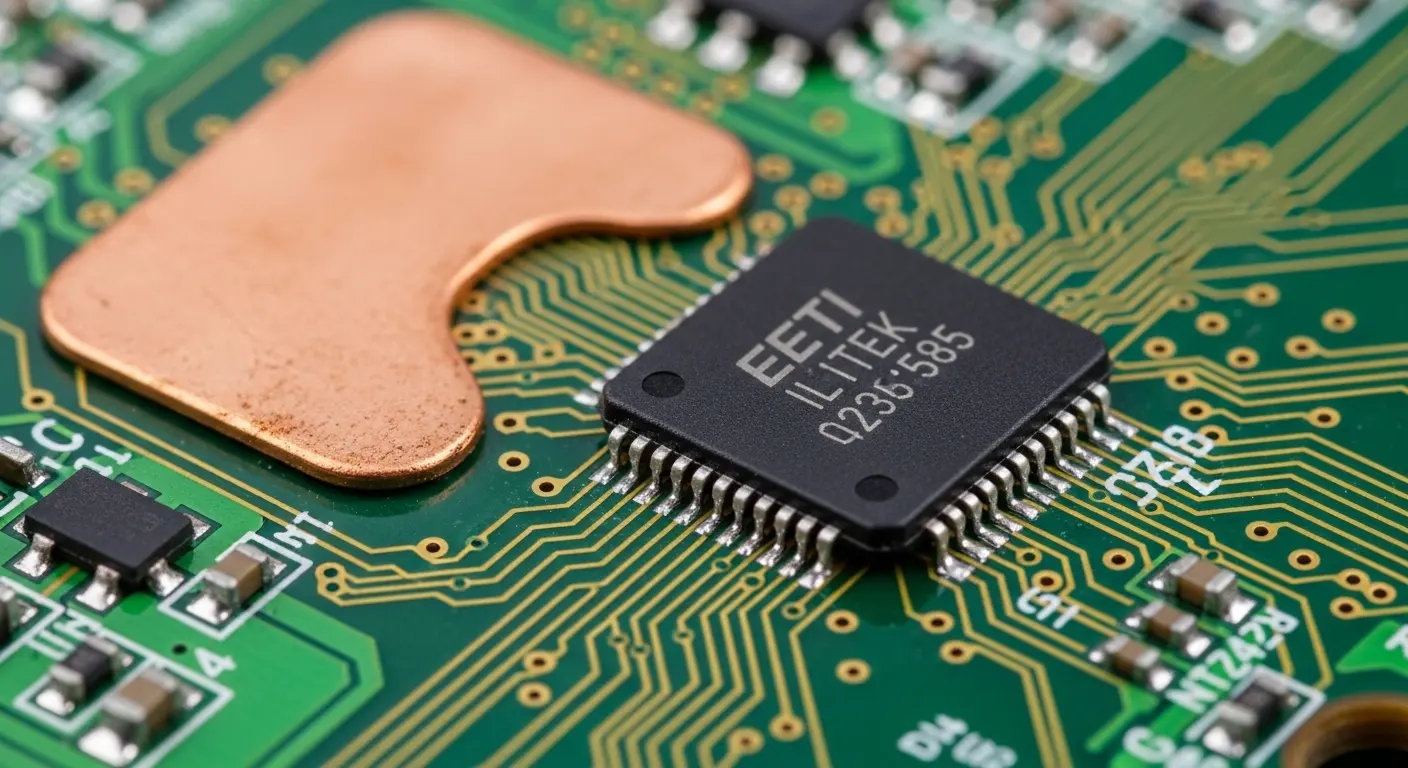
Electromagnetic Interference (EMI) is the most significant challenge when integrating an embedded capacitive touch solution. Industrial environments are filled with noise from high-voltage motors, wireless transmitters, and power supplies that can interfere with the sensor’s ability to detect a finger.
The Importance of the Signal-to-Noise Ratio (SNR)
The Signal-to-Noise Ratio (SNR) represents the strength of the intentional touch signal compared to the background electrical noise. A high SNR is required to prevent "ghost touches," where the screen reacts as if it were touched when no contact was made. According to data from Microchip Technology, maintaining a clean signal path is vital for touch reliability.
To achieve a high SNR, engineers must focus on proper grounding. The touch controller must be connected to the system’s common ground to allow noise to dissipate. In our experience, shielded FPC (Flexible Printed Circuit) cables are often necessary to protect the signal as it travels from the sensor to the controller.
Selecting Professional Controller IC Brands
The "brain" of the touch system is the controller IC. Leading capacitive touch controller IC brands such as EETI and ILITEK offer advanced algorithms to filter out noise. These controllers use frequency-hopping technology to move the touch-sensing signal away from the frequency of the interference.
For example, if a nearby power supply is creating noise at 60Hz, the controller can automatically shift its scanning frequency to a cleaner range. This ensures that the industrial capacitive touchscreen remains responsive even in electrically "noisy" factory settings.
Firmware Tuning for Specialized Environments
Firmware tuning is the process of adjusting the sensitivity of the controller to match the specific hardware configuration. This is especially important when using thick cover glass or when the device must be operated with industrial gloves.
During our testing, we found that "water rejection" is another critical firmware feature. In wet environments, water droplets can be mistaken for a touch. Advanced firmware identifies the electrical signature of water and ignores it, ensuring the device only responds to human interaction. This calibration is essential for any capacitive touch HMI interface used in marine or outdoor settings.
Mechanical Mounting: Air Gap vs. Optical Bonding
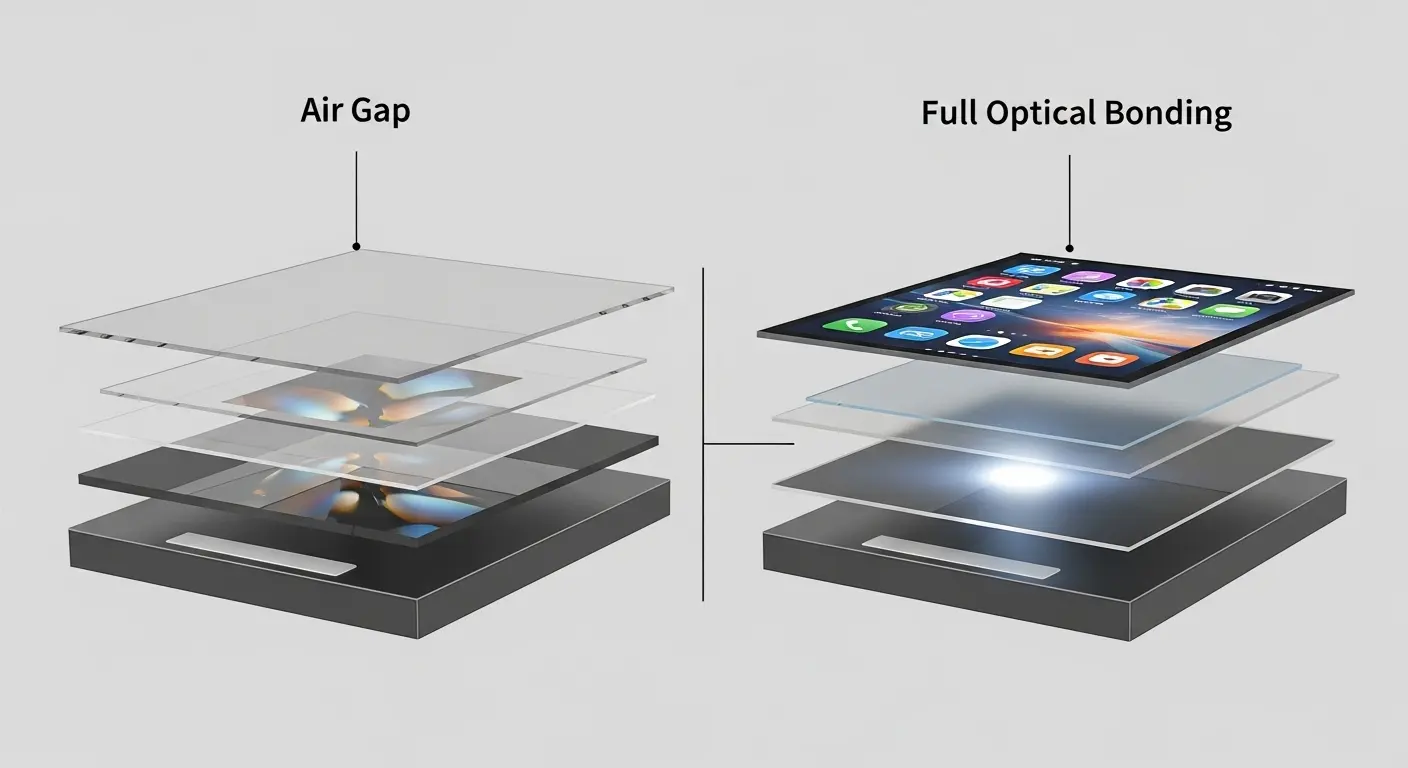
The way an embedded capacitive touch solution is mounted to the display significantly impacts both the optical quality and the physical durability of the final product. There are two primary methods for this: air gap (perimeter) bonding and full optical bonding.
Understanding Air Gap Bonding
Air gap bonding, or perimeter bonding, involves using double-sided adhesive tape around the edges of the display. This creates a thin pocket of air between the touch sensor and the LCD. This method is common because it is cost-effective and allows for easier repair if the screen is damaged.
The downside of air gap bonding is its optical performance. The air-to-glass interface causes internal reflections, which can make the screen difficult to read in bright light. Additionally, moisture can sometimes penetrate the air gap in humid conditions, leading to fogging. For these reasons, air gap bonding is typically reserved for indoor, climate-controlled environments.
The Advantages of Optical Bonding
Optical bonding involves filling the entire space between the touch sensor and the LCD with a clear adhesive resin. This eliminates the air gap entirely. Research from Grand View Research shows that optical bonding is becoming the standard for high-end industrial displays.
This method eliminates internal reflections, dramatically improving contrast and sunlight readability. Furthermore, because there is no air gap, there is no risk of internal condensation or dust ingress. Optical bonding also increases the physical strength of the display stack, making it more resistant to impacts and vibrations.
Designing for a Flush-Mount Finish
Modern industrial design favors a "bezel-free" or flush-mount finish. This is achieved by making the cover glass larger than the display so it can sit flat against the device enclosure. This design is not only aesthetically pleasing but also functional.
A flush-mount screen has no crevices, making it much easier to clean and disinfect. This is a critical requirement for medical devices and food processing equipment. However, achieving a perfect flush mount requires very tight mechanical tolerances and precise capacitive touchscreen manufacturing techniques.
Why choose a manufacturer-direct solution for custom embedding?
Off-the-shelf touch panels often fail to meet the specific mechanical or electrical requirements of a custom device. A manufacturer-direct embedded capacitive touch solution provides the level of customization needed for long-term industrial success.
Custom FPC Design and Routing
In many embedded projects, the standard cable (FPC) is too short, too long, or exits the sensor at an awkward angle. A direct manufacturer can design a custom FPC that fits perfectly within your specific enclosure. This prevents the cable from being bent or strained, which is a common cause of field failures.
Custom routing also allows you to place the controller IC in the most protected area of the chassis. Whether you need a force sensing capacitive screen or a standard multi-touch panel, the physical layout can be optimized for your hardware.
Access to Specialized Engineering Support
When you buy directly from a manufacturer, you gain access to their firmware and electrical engineers. They can help you troubleshoot EMI issues or tune the sensor for operation through 10mm thick glass. This level of support is rarely available through third-party distributors.
Factory engineers can also provide "Value-Added" services, such as pre-installing the touch panel onto your chosen LCD in a cleanroom environment. This ensures that no dust or debris is trapped between the layers, resulting in a much higher yield for your production line.
Ensuring Long-Term Component Availability
Industrial products often have a lifespan of 10 to 15 years. One of the biggest risks in these projects is "component obsolescence." If a touch controller or sensor is discontinued, it can force an expensive redesign of the entire product.
Manufacturers specialized in the industrial market understand this need. They can provide "End of Life" (EOL) support and guarantee that the same embedded capacitive touch solution will be available for many years. This stability is essential for maintaining a capacitive touch HMI interface in medical or aerospace applications.
FAQ
What is the maximum cover glass thickness for an embedded touch solution?
Standard capacitive touch screens support glass up to 3mm thick. However, industrial-grade controllers like those from EETI can be tuned to work through glass up to 10mm thick. This is necessary for vandal-proof kiosks or explosion-proof equipment.
Can an embedded capacitive touch screen work with heavy industrial gloves?
Yes, but this requires specific firmware tuning. The controller must be set to a higher sensitivity level to detect the electrical change through the glove material. Most professional industrial capacitive touchscreen systems support both latex and heavy leather gloves.
Is optical bonding necessary for indoor devices?
While not strictly necessary for indoors, optical bonding still provides benefits like increased impact resistance and better contrast. If your indoor environment has high humidity or very bright overhead lighting, optical bonding is highly recommended to prevent fogging and glare.
What is the difference between COB and COF controller structures?
COB (Chip on Board) means the controller IC is mounted on a separate PCB. COF (Chip on Flex) means the IC is mounted directly on the flexible ribbon cable. COB is generally more robust for industrial applications, while COF is used for space-saving in mobile devices.
How do I clean a capacitive touch screen in a medical setting?
You should use a cover glass with an Anti-Fingerprint (AF) coating. This makes the surface resistant to oils and easier to wipe down. Because the glass is chemically strengthened, it can withstand frequent cleaning with common medical disinfectants like 70% isopropyl alcohol.
Conclusion
Successfully integrating an embedded capacitive touch solution requires balancing technical specifications with environmental realities. By choosing the correct interface (I2C vs. USB) and ensuring your system is shielded from EMI, you can create a reliable and responsive user interface.
Prioritizing features like optical bonding and custom FPC design will extend the lifespan of your product and improve the user experience. Working with an experienced manufacturer ensures that your capacitive touch panel is optimized for your specific application, from medical monitors to heavy industrial controllers. Focus on high-quality components and precise firmware tuning to achieve the best results in the field.
Related Topics

Industrial Touch Display Technology Trends in the Era of Industry 4.0
Aug-07-2026

Touch Panel Selection Guide for Industrial, Outdoor, and Commercial Applications
Aug-07-2026

How to Choose the Right Touch Display Solution for Your Project
Aug-07-2026

How to Choose an Industrial Capacitive Touch Screen: 2026 Guide
Aug-07-2026
Get a Free Quote
✔ 16 Years Manufacture Service ★★★★★
✔ 3 Technical Experts And 52+ Project Engineers Will Assiste You
✔ Wanty Employs Over 52 Engineers, Many Of Whom Come From Leading Tft Lcd Module Companies Such As Tianma And Boe-Varitronix. Each Core Team Member Brings 15 Years Of Industry Experience.
✔ If you would like more information about our products and services, please contact us. Whether you need a standard solution or a customized one, we are here to meet your needs.
✔ Please complete the form below, and the selected location will contact you promptly. Thank you for visiting, and have a great day!
