Can Capacitive Touch Screens Be Customized? The Complete Engineering Guide
News
Mar-19-2026
Capacitive touch screens can be fully customized to meet specific mechanical, electrical, and environmental requirements for professional applications. Unlike consumer-grade tablets, industrial and medical displays often require tailored glass thickness, specialized surface treatments, and custom firmware tuning. In our experience, off-the-shelf solutions rarely meet the rigorous demands of high-reliability sectors. This article explores the various layers of customization available for Projected Capacitive (PCAP) technology. We will discuss how custom designs solve complex integration challenges.
Standard screens often fail in extreme conditions. For example, a standard screen might not respond to a gloved hand in a sterile surgical suite. Similarly, an outdoor kiosk might become unreadable under direct sunlight. Customization bridges these gaps. By modifying the hardware and software layers, we ensure the interface remains intuitive and durable. This guide provides a detailed selection framework for engineers and procurement managers.
Why Customize a Capacitive Touch Screen?
Customization is necessary when standard displays cannot withstand the specific environmental or functional stressors of a professional application. Most industrial projects require a custom touch screen design to ensure long-term reliability and seamless mechanical integration. According to Grand View Research, the demand for specialized PCAP technology is growing as industries transition to more complex human-machine interfaces (HMI).
Solving Environmental Challenges
Environmental factors often dictate the need for custom hardware. For instance, marine environments expose screens to salt spray and high humidity. These conditions can cause "ghost touches" on standard panels. Consequently, engineers must customize the controller firmware to ignore liquid interference. Furthermore, outdoor applications require high-brightness backlights and UV-resistant materials to prevent screen yellowing over time.
Meeting Industry-Specific Standards
Different sectors have unique regulatory requirements. The medical industry must comply with ISO 13485 standards. This often necessitates antimicrobial coatings to maintain hygiene. In contrast, the automotive sector requires high impact resistance and wide operating temperature ranges. Based on our past case studies, a capacitive vs resistive pros and cons analysis usually leads engineers to choose custom PCAP for its superior durability and multi-touch capabilities.

Customizing the Cover Lens: The Mechanical Layer
The cover lens is the outermost layer of the touch panel. It provides the primary protection for the sensor and the display. Customizing this layer is essential for both aesthetic branding and physical durability. Engineers can choose from various materials, shapes, and thicknesses to suit the final product's housing.
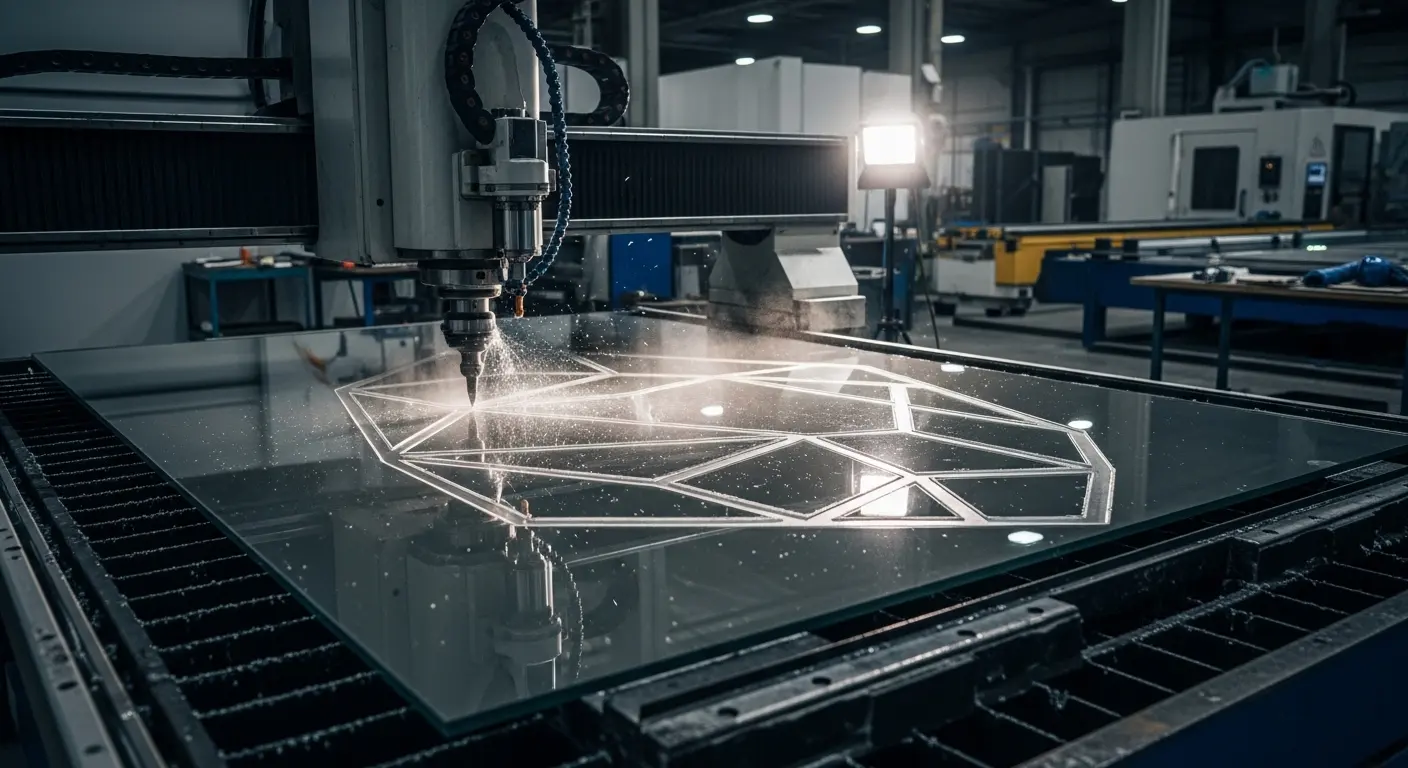
CNC Shape Cutting and Drilling
We use advanced CNC machinery to cut glass into complex shapes. This allows the screen to fit perfectly into custom enclosures. Additionally, we can drill precise holes for physical buttons, cameras, or microphones. These modifications are common in smart home controllers and automotive dashboards. The glass edges can also be polished or beveled for a premium feel and improved safety.
Silk-Screen Printing and Branding
Custom silk-screen printing allows for the addition of logos and colored borders. You can match the screen's border to the specific Pantone color of your brand. Furthermore, opaque printing can hide internal components or mounting adhesives. This creates a clean, professional appearance for the final device. Many clients use this feature to integrate hidden-until-lit icons or status indicators.
Surface Treatments and Coatings
Surface treatments are critical for improving visibility and usability in challenging lighting conditions. Without these customizations, a high-quality display may become unusable due to glare or fingerprints. There are three primary coatings used in professional capacitive touchscreen manufacturing.
Anti-Glare (AG) and Anti-Reflective (AR)
Anti-glare (AG) treatments use a chemical etching process to scatter reflected light. This is ideal for indoor industrial settings with overhead lighting. In contrast, Anti-Reflective (AR) coatings use thin-film deposition to cancel out reflected light waves. AR coatings are essential for outdoor kiosks. According to the Society for Information Display, AR treatments can increase sunlight readability by over 40% compared to untreated glass.
Anti-Fingerprint (AF) and Antimicrobial (AM)
Anti-fingerprint (AF) coatings use oleophobic materials to reduce the visibility of skin oils. This makes the screen easier to clean and maintains optical clarity. For medical applications, antimicrobial (AM) coatings are used. These coatings typically incorporate silver ions. According to ISO 22196 testing, these treatments can reduce bacterial growth on the screen surface by up to 99.9%.
Glass Durability and Impact Resistance
Industrial environments often expose screens to physical abuse. Customizing the glass thickness and tempering process is vital for preventing breakage. We can provide glass thickness ranging from 0.55mm for lightweight portables to over 10mm for vandal-proof installations.
Chemical vs. Physical Strengthening
Most custom touch screens use chemically strengthened glass, such as Gorilla Glass. This process involves an ion-exchange that creates deep surface compression. It makes the glass significantly more resistant to scratches and impacts. For extreme environments, we also offer physical tempering. This is often used for very thick glass panels required in heavy machinery.
Understanding IK Ratings
The IK rating system defines the level of protection against mechanical impacts. For example, an IK10 rating means the screen can withstand a 20-joule impact. This is equivalent to dropping a 5kg steel mass from 40cm. Achieving this level of durability requires a capacitive touch screen manufacturer to use a combination of thick glass and specialized bonding techniques.
Customizing the Touch Sensor and FPC
The touch sensor is the electrical heart of the PCAP panel. It consists of a transparent conductive layer, usually Indium Tin Oxide (ITO), patterned on glass or film. Customizing the sensor layout is necessary for non-standard aspect ratios or specialized electrical routing.
FPC Length and Routing
The Flexible Printed Circuit (FPC) connects the touch sensor to the main PCB. In custom designs, we can adjust the FPC length, width, and exit location. This flexibility is crucial for compact devices where internal space is limited. We can also add EMI shielding to the FPC. This prevents electrical noise from the display or internal antennas from interfering with the touch signal.
Sensor Structures: G+G vs. G+F+F
Engineers can choose between different sensor architectures. A Glass-on-Glass (G+G) structure offers the highest optical clarity and best environmental stability. However, it is thicker and heavier. A Glass-on-Film-on-Film (G+F+F) structure is thinner and lighter. It is often used in portable medical devices. Choosing the right structure depends on the balance between weight, thickness, and optical requirements.
Controller Tuning and Firmware Customization
The controller IC translates electrical changes into touch coordinates. Firmware customization is perhaps the most critical aspect of a professional capacitive touch custom screen. Without proper tuning, a screen might fail to work through thick glass or under rain.
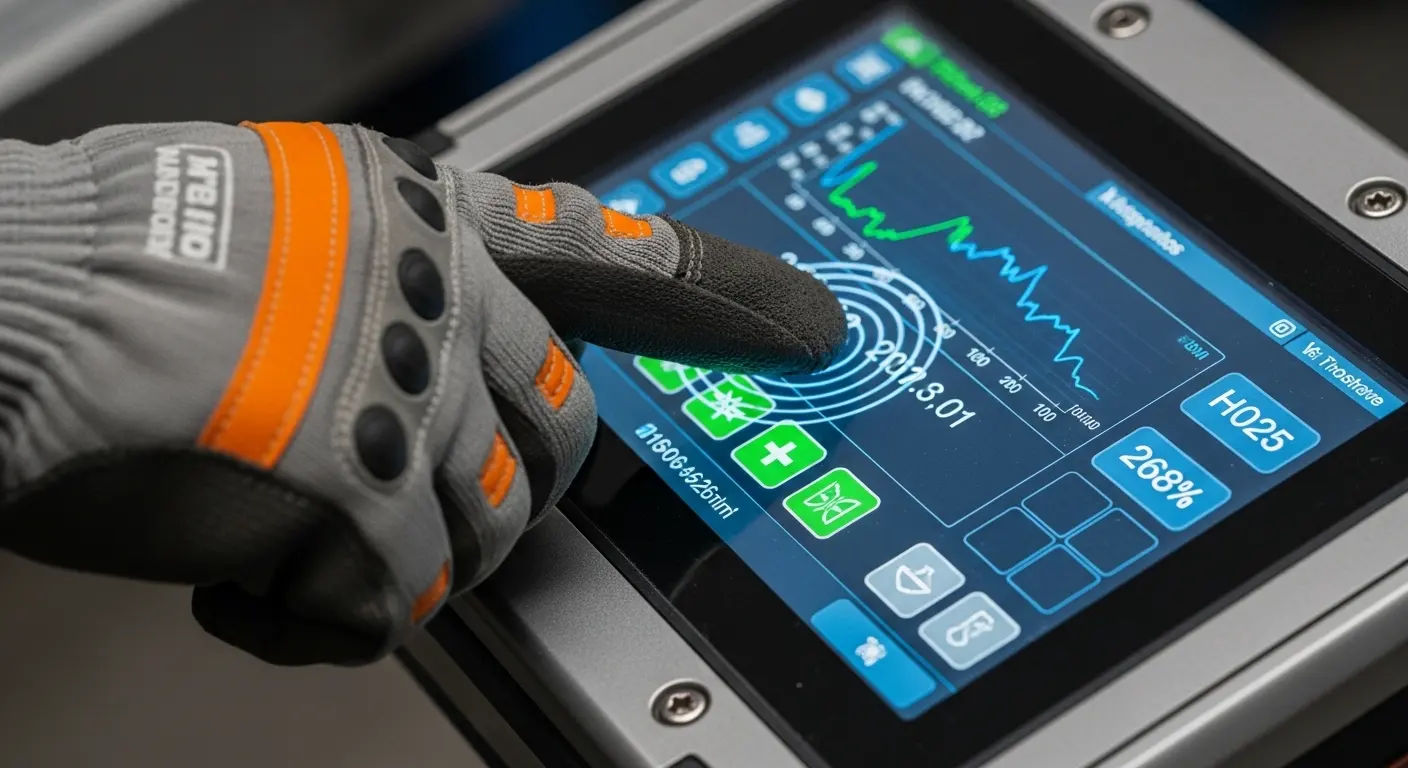
Glove-Touch and Water-Rejection
Standard controllers are tuned for a bare finger. However, industrial workers often wear heavy gloves. We can modify the firmware sensitivity to detect the smaller electrical change caused by a gloved hand. Additionally, we implement water-rejection algorithms. These allow the controller to distinguish between a conductive water droplet and a human finger. This ensures the device remains functional in wet outdoor settings.
Noise Immunity and EMI/EMC
Electrical noise can cause "ghost touches" or jittery cursor movement. This noise often comes from the LCD backlight or nearby power supplies. We use advanced controller brands like EETI and ILITEK for custom projects. These controllers provide superior signal-to-noise ratios. We can perform custom tuning to ensure the device passes strict EMI/EMC compliance testing for the aerospace or medical industries.
Customizing Visibility: Optical Bonding
Optical bonding is the process of filling the air gap between the touch sensor and the LCD. This customization significantly improves the visual performance of the display. It is a standard requirement for high-end professional equipment.
Benefits of Optical Bonding
The primary benefit is the elimination of internal reflections. In a standard air-gap assembly, light reflects off every surface, reducing contrast. Bonding the layers together with a clear adhesive (OCR or OCA) creates a single refractive index. This leads to a 200% to 300% improvement in contrast in bright environments. Furthermore, bonding prevents dust and moisture from entering the space between the screen and the display.
Improved Mechanical Strength
Optical bonding also makes the entire display assembly more rugged. The adhesive acts as a shock absorber. If the cover glass breaks, the bonding agent holds the shards together. This prevents injury to the user and protects the underlying LCD from damage. Based on our experience, bonded displays are essential for any device used in public transportation or heavy industry.
What is the Process for Customizing a Touch Screen?
Customization follows a structured engineering workflow to ensure the final product meets all specifications. Most projects move from a conceptual CAD drawing to a fully tested prototype within a few weeks. Working with a dedicated capacitive touch screen manufacturer streamlines this process.
CAD Design and Prototyping
The process begins with the client's mechanical drawings. We create a detailed CAD model of the touch panel, including all glass dimensions and FPC routing. Once the design is approved, we produce a small batch of prototypes. These units allow the client to test the mechanical fit and electrical performance within their actual housing. During this stage, we can also provide various capacitive touch screen sizes to determine the best fit for the user interface.
Testing and Validation
After prototyping, the custom panels undergo rigorous testing. This includes high/low-temperature cycles, salt spray tests, and impact testing. We also perform specialized firmware tuning at the client's site if necessary. This ensures the touch sensitivity is perfectly calibrated for the final assembly's electrical environment. Final mass production only begins after the client provides formal validation of the prototype's performance.
Industry-Specific Customization Examples
To help you understand the possibilities, we can look at how different industries utilize these custom features. Every environment has a "dominant" challenge that customization must address.
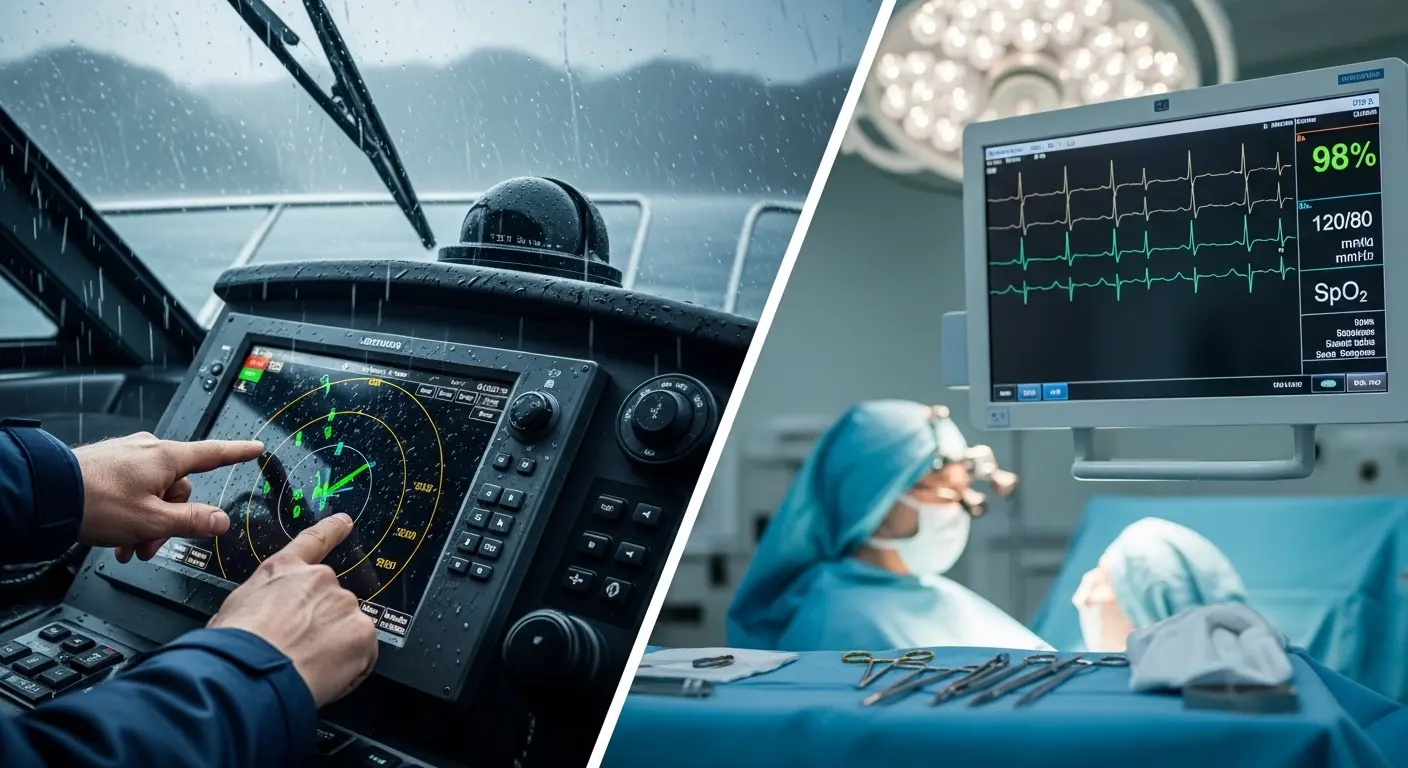
Marine and Offshore
Marine displays require the most extreme environmental protection. Customization for this sector includes 3mm to 5mm tempered glass with AR coatings. The controller must be tuned for high-salinity water rejection. Additionally, we often use full optical bonding to prevent fogging in high-humidity conditions. These features ensure the radar or navigation screen remains clear and responsive in a storm.
Medical Imaging and Diagnostics
Medical screens focus on clarity and hygiene. These panels often feature a flush-mount design with no bezel. This allows for easy sterilization. We apply antimicrobial coatings and tune the controller for use with surgical latex gloves. High-resolution imaging also requires a G+G structure with AR coating to ensure the most accurate color representation for diagnostic tasks.
FAQ: Customizing Capacitive Touch Screens
What is the minimum order quantity (MOQ) for custom screens?
The MOQ varies depending on the complexity and size of the panel. For standard industrial sizes, MOQs can be as low as 50 to 100 pieces. However, highly specialized designs with custom glass molds may require higher quantities. We recommend consulting with our engineering team for a specific quote.
Can you change the glass shape for my enclosure?
Yes, we can customize the shape of the cover glass using precision CNC cutting. This includes rounded corners, circular cutouts, and complex geometric shapes. We can also add holes for physical components like cameras or mechanical dials.
How do custom screens work with thick gloves?
We achieve glove-touch support through firmware tuning. By increasing the sensitivity of the controller IC, we can detect the change in capacitance even through thick layers of material. We can calibrate the screen for specific glove types used in your industry.
What surface treatments are best for outdoor kiosks?
For outdoor use, we strongly recommend a combination of Anti-Reflective (AR) coating and Anti-Fingerprint (AF) coating. AR coating minimizes glare from the sun, while AF coating keeps the screen clear from user smudges. Optical bonding is also essential for outdoor visibility.
How long does the customization process take?
The design and prototyping phase usually takes between 2 to 4 weeks. This includes the time for CAD approval and the manufacturing of the initial samples. Mass production typically follows within 4 to 6 weeks after the prototype has been validated by the client.
Conclusion
Capacitive touch screens are not a "one-size-fits-all" technology. For professional applications, customization is the key to achieving optimal performance and longevity. By modifying the cover glass, surface treatments, sensor layout, and controller firmware, you can create a tool specifically designed for your environment.
The primary takeaways are:
- Mechanical customization ensures a perfect fit and high durability through CNC cutting and IK-rated glass.
- Surface treatments like AR and antimicrobial coatings solve visibility and hygiene challenges.
- Firmware tuning is essential for supporting gloves and rejecting water interference.
If your project requires a specialized interface, do not settle for a standard component. Reach out to the WANTY engineering team today to discuss your custom PCAP requirements and request a technical quote.
Related Topics

Industrial Touch Display Technology Trends in the Era of Industry 4.0
Aug-07-2026

Touch Panel Selection Guide for Industrial, Outdoor, and Commercial Applications
Aug-07-2026

How to Choose the Right Touch Display Solution for Your Project
Aug-07-2026

How to Choose an Industrial Capacitive Touch Screen: 2026 Guide
Aug-07-2026
Get a Free Quote
✔ 16 Years Manufacture Service ★★★★★
✔ 3 Technical Experts And 52+ Project Engineers Will Assiste You
✔ Wanty Employs Over 52 Engineers, Many Of Whom Come From Leading Tft Lcd Module Companies Such As Tianma And Boe-Varitronix. Each Core Team Member Brings 15 Years Of Industry Experience.
✔ If you would like more information about our products and services, please contact us. Whether you need a standard solution or a customized one, we are here to meet your needs.
✔ Please complete the form below, and the selected location will contact you promptly. Thank you for visiting, and have a great day!
