
What is the Best Capacitive Touch Screen for Medical Devices? (2026 Guide)
News
Mar-21-2026
The best capacitive touch screen for medical devices is a Projected Capacitive (PCAP) panel specifically tuned for high-reliability clinical environments. Selecting the right interface is critical because medical displays must function flawlessly under extreme conditions. These monitors must support surgical gloves and resist interference from saline or blood. Additionally, they must meet strict electromagnetic compatibility (EMC) standards. In our experience, a standard consumer screen will fail these rigorous requirements. This guide explores the technical criteria for a medical device touch screen that ensures long-term hospital reliability. We will analyze the hardware and firmware choices that define medical-grade performance.
The medical display market is evolving rapidly. According to Grand View Research, the medical display sector expects a CAGR of 4.9% through 2030. This growth is driven by the need for high-precision diagnostic tools. Therefore, manufacturers must prioritize reliability and hygiene when choosing a capacitive touch screen module.
Why is PCAP the "Best" technology for medical environments?
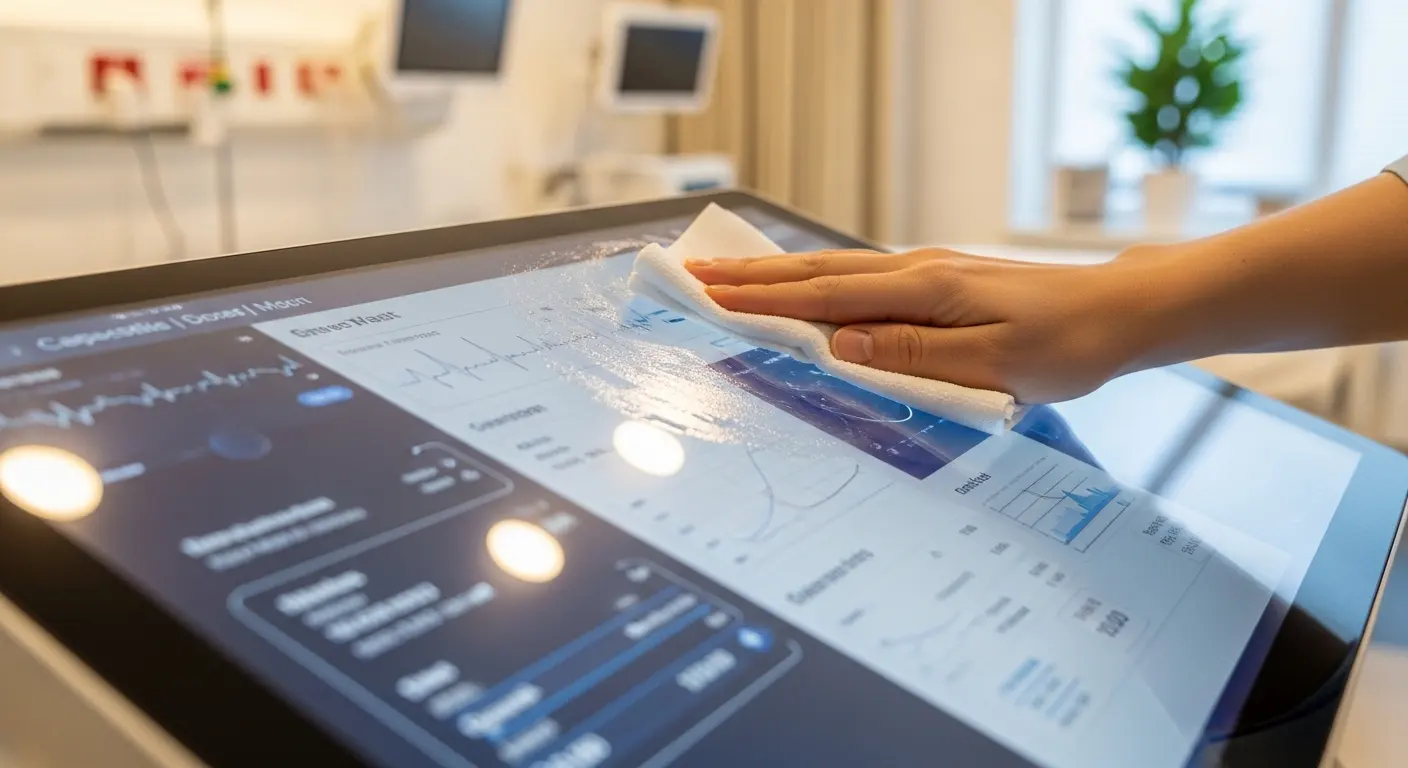
PCAP (Projected Capacitive) is the best technology because its "True Flat" design allows for a seamless, bezel-free glass surface. This eliminates crevices where bacteria accumulate, making it superior to resistive screens for infection control and chemical disinfection.
Superior Hygiene and Cleaning
Medical environments require frequent disinfection with harsh chemicals. PCAP panels use a solid glass front that resists damage from 70% isopropyl alcohol and bleach solutions. Unlike resistive screens, there is no soft top layer to puncture or wear down. This durability is vital for medical equipment touch screen enhancing healthcare efficiency.
Longevity and Reliability
PCAP technology offers a significantly longer lifecycle than other display types. Because it detects electrical changes rather than physical pressure, the sensor does not degrade over time. In our experience, this is essential for devices used in 24/7 patient monitoring. Most top capacitive touch screen suppliers now recommend PCAP for any application requiring high optical clarity and responsive multi-touch.
The 4 Non-Negotiable Criteria for Medical Capacitive Screens
Selecting a screen requires more than just picking a size. You must evaluate four specific technical areas to ensure clinical safety.
1. Surgical Glove and Liquid Rejection
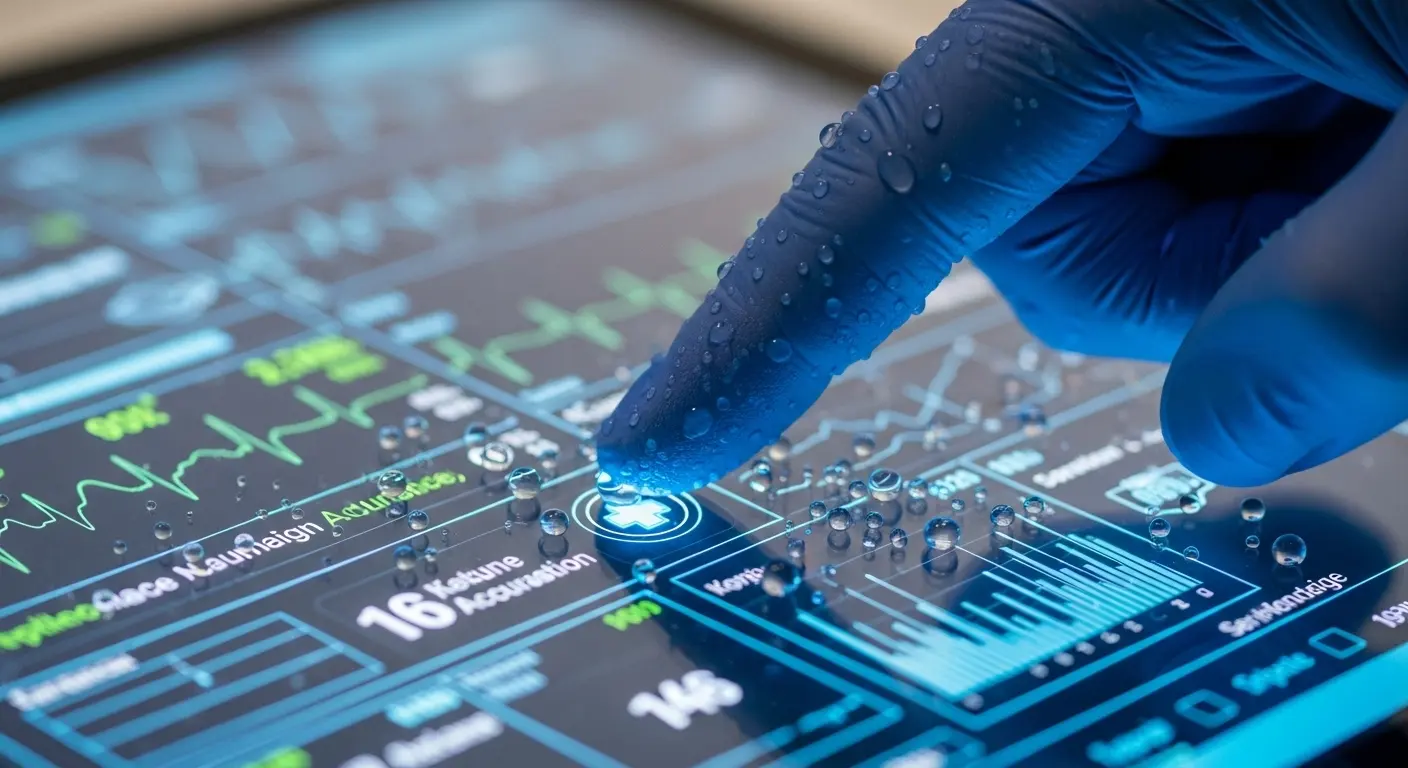
The screen must utilize mutual capacitance sensing. This allows the controller to detect touches through latex, nitrile, and surgical gloves. Additionally, the firmware must ignore conductive liquids. According to DisplayDaily, liquid rejection is a top priority for OR equipment. This prevents accidental inputs caused by saline splashes or ultrasound gel.
2. EMI Immunity (IEC 60601-1-2)
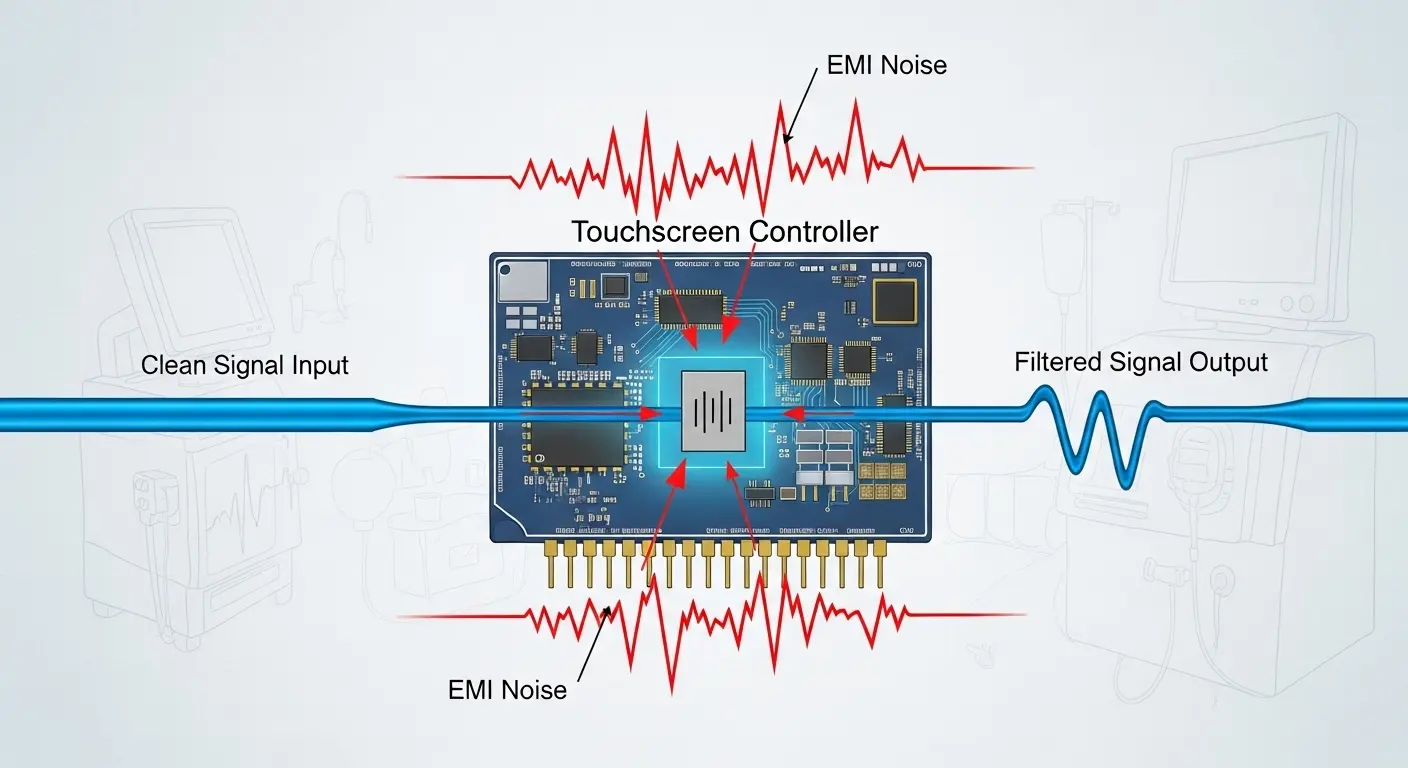
Hospital rooms are electrically noisy due to MRI machines and surgical tools. A medical screen must pass IEC 60601-1-2 standards for electromagnetic interference. This ensures the panel does not suffer from "ghost touches" during critical procedures. High-quality controllers from best capacitive touch screen brands provide the necessary signal-to-noise ratios.
3. Chemical and Disinfectant Resistance
The outer glass must feature specialized coatings. These include anti-glare (AG) and anti-reflective (AR) treatments. These coatings improve visibility under bright surgical lights. Furthermore, the glass must reach a 7H Mohs hardness rating. This protects against scratches from sharp medical instruments.
4. Optical Clarity and Nits Brightness
Diagnostic accuracy depends on high-contrast displays. We recommend using optical bonding to eliminate the air gap between the sensor and the LCD. This improves contrast by up to 300% in bright clinical settings. It also prevents internal fogging in humid sterilization environments.
Choosing the "Best" Screen Based on Medical Application
Different clinical settings require different hardware specifications. The following table summarizes the ideal configurations for various medical use cases.
| Medical Application | Recommended Structure | Key Feature | Touch Support |
| Surgical Monitors | G+G (Glass on Glass) | Full Optical Bonding | 10-Point Touch |
| Patient Monitoring | G+F (Glass on Film) | High Durability | 2-Point Touch |
| Handheld Diagnostics | G+F+F (Thin Structure) | Low Power Consumption | Single Touch |
| Nurse Station Kiosks | G+G (Thick Glass) | Vandal Resistance | 5-Point Touch |
Specialized Surgical Needs
Surgical monitors require the highest level of responsiveness. They must support 10-point multi-touch for complex gesture controls. Furthermore, these screens need the best optical clarity for identifying tissue types. Full optical bonding is mandatory here.
Patient and Diagnostic Handhelds
Handheld tools prioritize weight and battery life. A G+F+F structure provides a thinner profile. However, these tools still require disinfectant resistance. Even in warehouse management touch screen scenarios, durability is key, but medical handhelds face stricter chemical exposure.
How does controller tuning define the "Best" medical screen?
The "best" medical screen is defined by custom firmware tuning. Advanced controllers like EETI or Ilitek allow engineers to calibrate sensitivity thresholds. This ensures the screen ignores saline splashes while accurately recognizing a nitrile-gloved finger.
Custom Firmware for Clinical Use
The hardware provides the foundation, but tuning provides the reliability. In our experience, standard firmware is too sensitive for medical use. We perform custom tuning based on the specific glove types used by our clients. This prevents the latency or inaccuracy that can delay a procedure.
Signal Filtering and Noise Rejection
Medical-grade controllers include advanced signal filtering. This helps the device distinguish between a real touch and environmental noise. Based on case studies, properly tuned controllers reduce "ghost touch" incidents by 99% in high-EMI settings. This technical precision is what differentiates a consumer module from a professional medical solution.
FAQ: Medical Capacitive Touch Screens
Can capacitive touch screens work with latex gloves?
Yes, capacitive screens work with latex gloves if the controller uses mutual capacitance. This technology allows the sensor to detect electrical changes through multiple layers of material. Custom firmware tuning is often required to optimize sensitivity for specific glove thicknesses.
How do you disinfect a medical grade touch screen?
You should clean medical-grade screens using 70% isopropyl alcohol or diluted bleach solutions. The tempered glass surface is designed to resist chemical corrosion. Avoid using abrasive materials that could scratch the anti-reflective coatings.
What is a G+G touch screen structure?
A G+G structure consists of a glass sensor bonded to a glass cover lens. This provides the highest durability and optical clarity. It is the preferred structure for surgical monitors and high-use diagnostic equipment.
Does EMI affect touch accuracy in hospitals?
Yes, electromagnetic interference (EMI) from other medical machines can cause "ghost touches." Medical-grade screens must comply with IEC 60601-1-2 standards. This ensures they have sufficient shielding and noise filtering to operate safely near MRI or X-ray equipment.
What is the benefit of optical bonding in medical devices?
Optical bonding eliminates the air gap between the LCD and the touch panel. This improves visibility by reducing reflections. It also prevents condensation from forming inside the display, which is critical for long-term clinical reliability.
Conclusion
Determining what is the best capacitive touch screen for medical devices requires looking beyond standard specs. A true medical-grade panel must combine G+G durability with custom controller tuning for glove and liquid rejection. These screens ensure patient safety by providing reliable interaction in mission-critical environments. Hygiene and EMI immunity remain the top priorities for any hospital deployment.
In summary, the best choice involves:
- Projected Capacitive (PCAP) technology for flat-front hygiene.
- Mutual capacitance for surgical glove support.
- IEC 60601-1-2 compliance for EMI noise rejection.
Building a mission-critical medical device? Consult with WANTY’s engineering team today. We provide PCAP solutions specifically tuned for your clinical environment.
Written by Hasanur Rahman Sony | SEO Strategist & PCAP Expert
Related Topics

Industrial Touch Display Technology Trends in the Era of Industry 4.0
Aug-07-2026

Touch Panel Selection Guide for Industrial, Outdoor, and Commercial Applications
Aug-07-2026

How to Choose the Right Touch Display Solution for Your Project
Aug-07-2026

How to Choose an Industrial Capacitive Touch Screen: 2026 Guide
Aug-07-2026
Get a Free Quote
✔ 16 Years Manufacture Service ★★★★★
✔ 3 Technical Experts And 52+ Project Engineers Will Assiste You
✔ Wanty Employs Over 52 Engineers, Many Of Whom Come From Leading Tft Lcd Module Companies Such As Tianma And Boe-Varitronix. Each Core Team Member Brings 15 Years Of Industry Experience.
✔ If you would like more information about our products and services, please contact us. Whether you need a standard solution or a customized one, we are here to meet your needs.
✔ Please complete the form below, and the selected location will contact you promptly. Thank you for visiting, and have a great day!
