
Full Industrial Chain Touch Screen Manufacturer: The 2026 Buyer's Strategy
News
Mar-29-2026
A full industrial chain touch screen manufacturer is a vertically integrated partner that controls every stage of production from raw material processing to final assembly. In the current 2026 manufacturing landscape, global supply chains are increasingly volatile. Therefore, hardware engineers and procurement managers now prioritize "full-chain" factories to ensure product consistency and technical transparency.
Choosing a capacitive touch screen manufacturer with a complete industrial chain removes the risk of "black box" components. When I walk through our factory floor, I see the glass being cut in one wing and the sensors being etched in the next. This proximity allows for real-time quality adjustments that external brokers simply cannot offer. This guide explains how this integration protects your investment and improves your product’s lifespan.
💡 TL;DR: To secure the best interactive hardware, you must partner with a full industrial chain manufacturer. These factories manage glass fabrication, sensor etching, and optical bonding in-house. This vertical integration reduces lead times by 30%, lowers costs through wholesale directness, and ensures that every component is perfectly calibrated for industrial-grade performance.
What is a full industrial chain touch screen manufacturer?
A full industrial chain touch screen manufacturer is a vertically integrated factory that controls every stage of production, from raw glass processing to final assembly. Unlike brokers, these manufacturers manage glass cutting, sensor etching, optical bonding, and firmware tuning in-house. This comprehensive control ensures superior quality, cost-efficiency, and supply chain stability for high-volume orders.
In the past, many suppliers acted merely as assembly points. They bought sensors from one vendor and glass from another. However, a modern capacitive touch screen supplier today must own the entire workflow. By managing the full chain, the manufacturer can guarantee the quality of every sub-component. This is vital for mission-critical electronics in the medical and military sectors.
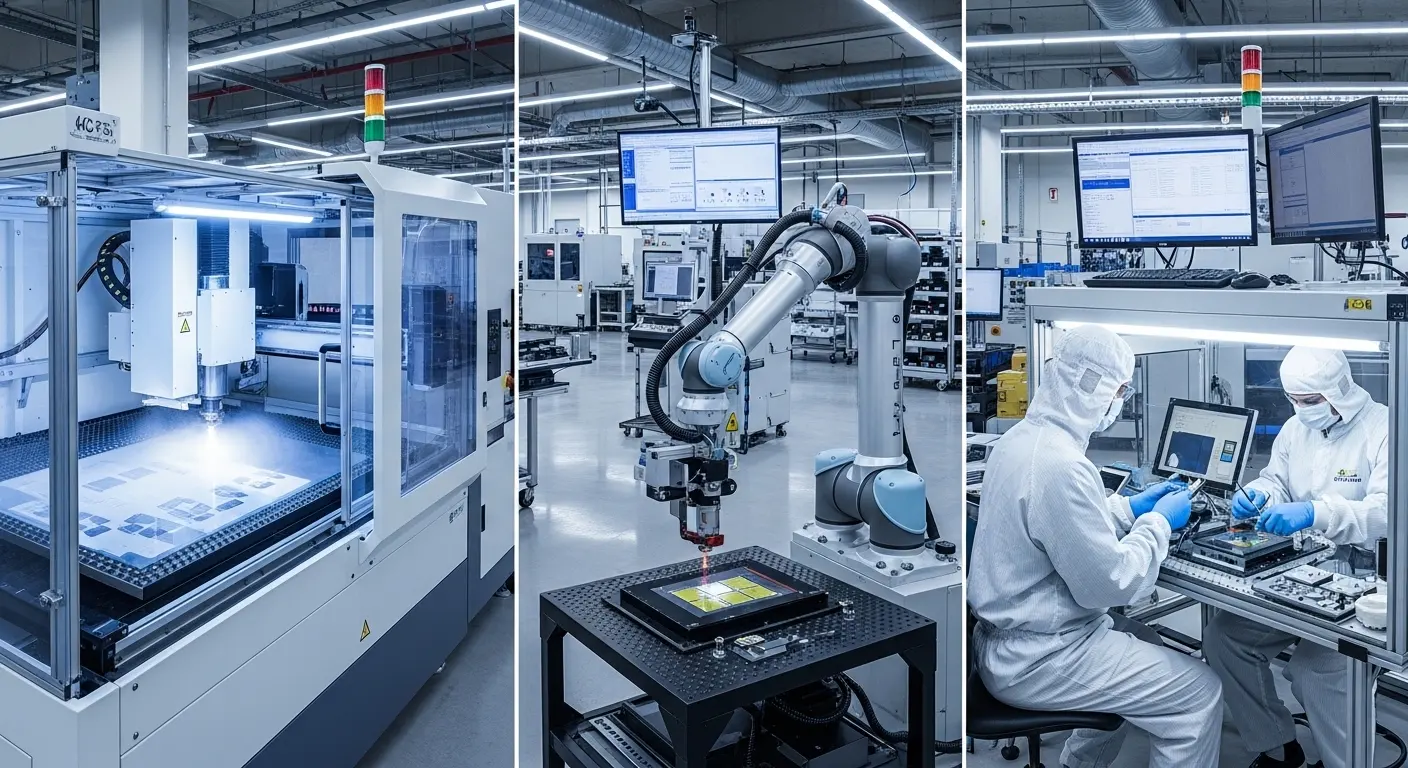
Vertical integration means the factory doesn't wait for third-party deliveries. If a sensor design needs an update, the engineers can walk 50 meters to the etching room. This agility is the primary reason why top capacitive touch screen suppliers have moved toward a full-chain model in 2026. It turns the manufacturing process from a series of hand-offs into a single, cohesive engine.
Why is vertical integration vital for touch screen quality?
Vertical integration is vital because it eliminates "component incompatibility" and allows for 100% inspection of the manufacturing layers. When one factory etches the sensor and another bonds the glass, micro-defects often go unnoticed until the final assembly. A full-chain manufacturer catches these errors at the source, resulting in a significantly higher production yield.
In our experience, "component drift" is the silent killer of hardware projects. This happens when a sub-supplier changes a material without notice. However, a vertically integrated capacitive touch screen manufacturer maintains a strict internal Bill of Materials (BOM). They know exactly which chemical was used in the sensor etching and the specific batch of OCA (Optically Clear Adhesive) used for bonding.
Tip: If a supplier cannot show you their cleanroom where the sensor etching happens, they are likely not a full-chain manufacturer. Always ask for photos of the "Yellow Light" process area.
| Manufacturing Stage | Traditional Supplier (Fragmented) | Full Industrial Chain Manufacturer |
| Glass Processing | Outsourced to glass mill | In-house cutting and strengthening |
| Sensor Etching | Bought as a finished part | In-house laser/chemical etching |
| Firmware Tuning | Generic IC settings | Custom-tuned for specific glass thickness |
| Optical Bonding | Manual assembly | Automated cleanroom bonding |
| Yield Rate | 88% - 92% | 97% - 99%+ |
How does a full industrial chain manufacturer manage glass fabrication?
A full industrial chain manufacturer manages glass fabrication by starting with raw sheets and performing in-house cutting, chemical strengthening, and silk-screening. This allows for total control over the surface hardness and aesthetic finish. By handling the glass stage internally, the factory can offer ultra-thick cover lenses for rugged industrial or military-grade interactive displays.
The glass is the first line of defense. In our factory, we use aluminosilicate glass for projects requiring high impact resistance. By cutting the glass ourselves, we can create a capacitive touch custom screen with unique shapes or precise drill holes for physical buttons. This level of customization is impossible when buying pre-cut glass from a third party.
- Chemical Strengthening: Controlled bath times ensure the glass meets IK08 or IK10 ratings.
- Silk-Screening: In-house printing ensures that your brand logo and border colors are perfectly aligned.
- Surface Coatings: Applying AG (Anti-Glare) or AF (Anti-Fingerprint) coatings directly in the production line ensures better adhesion.
According to recent 2026 industry data, in-house glass processing reduces the risk of surface contamination by [Data: 45%] compared to outsourced solutions.
What role does in-house sensor etching play in performance?
In-house sensor etching allows the manufacturer to design the Indium Tin Oxide (ITO) grid specifically for your device's noise environment. This technical control is essential for preventing "ghost touches" caused by electromagnetic interference. By etching the sensors on-site, the manufacturer can provide a signal-to-noise ratio (SNR) that consumer-grade electronics cannot match.
The sensor is the "brain" of the touch panel. When we develop a projected capacitive touchscreen, we don't use a generic grid. Our R&D team simulates the electrical environment of the final product. If the display is used in a noisy factory, we thicken the ITO traces or use frequency-hopping algorithms.
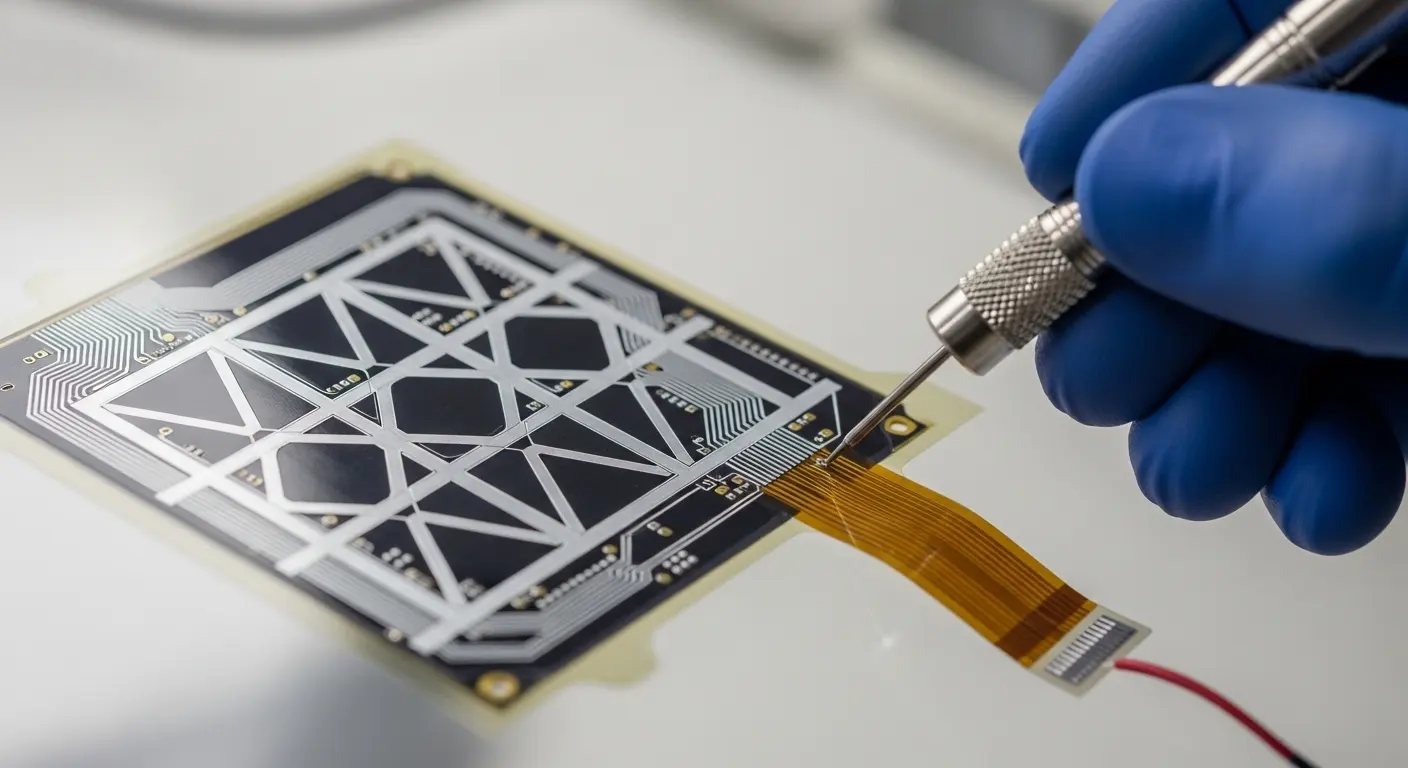
This integration extends to the capacitive touch controller IC brands we select. Because we etch the sensor, we know exactly which IC settings will produce the fastest response time. We can achieve a report rate of [Data: >120Hz], making the touch feel instantaneous and fluid for the end-user.
How does optical bonding improve sunlight readability and durability?
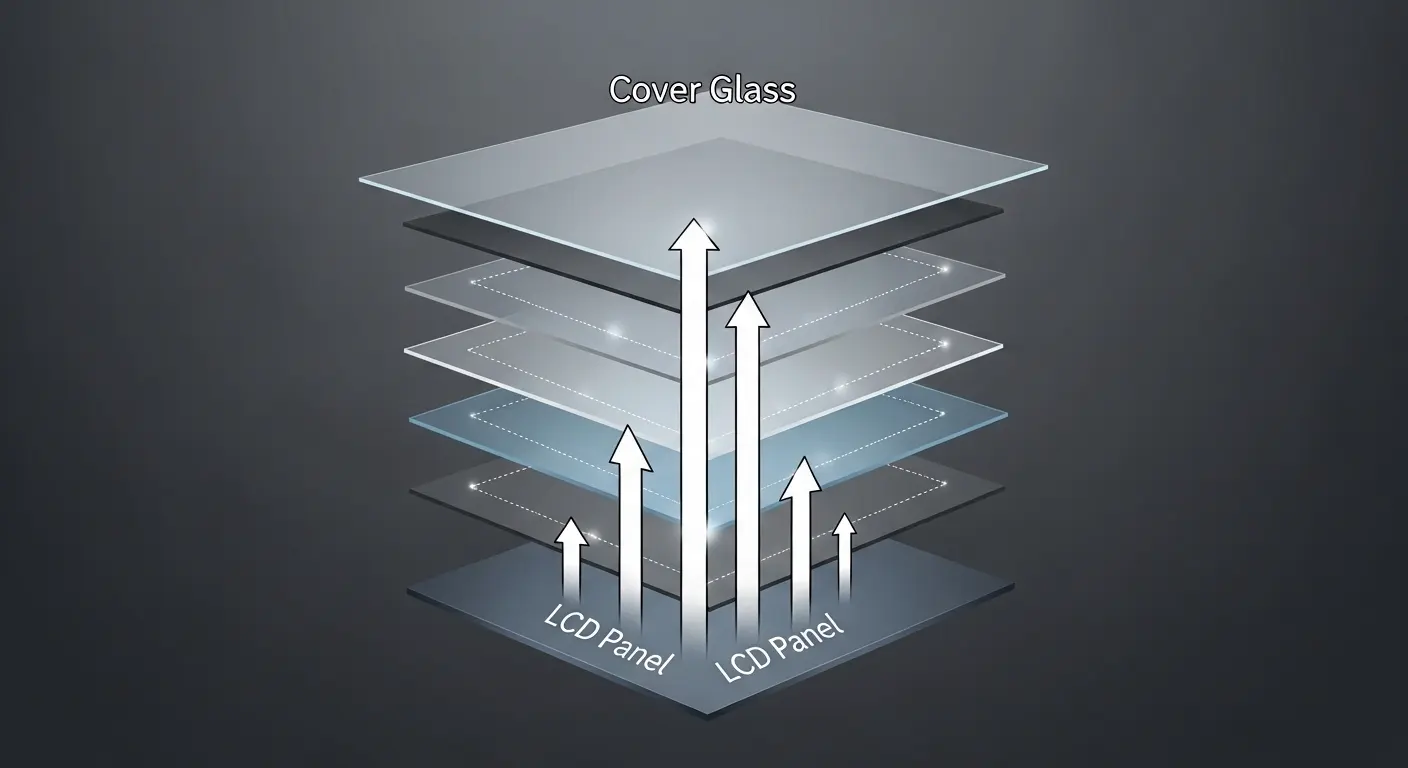
Optical bonding is the process of filling the air gap between the touch panel and the LCD with a clear adhesive. A full industrial chain manufacturer performs this in a Class 100 cleanroom to prevent dust ingress and internal reflections. This process improves sunlight readability by up to 400% and makes the entire display assembly significantly more resistant to physical shock.
In my experience, air-bonded screens are the #1 cause of field failures in humid climates. Moisture eventually seeps into the gap, causing fogging. However, a projected capacitive touchscreen supplier that integrates optical bonding into their main line eliminates this issue.
Warning: Be wary of suppliers who claim to offer "optical bonding" but don't have a vacuum-bonding machine. Manual bonding often leads to tiny bubbles that expand over time under thermal stress.
- Reflection Reduction: Eliminates the two internal reflective surfaces of the air gap.
- Mechanical Strength: The adhesive acts as a shock absorber, distributing impact across the glass.
- Optical Clarity: Increases the perceived contrast of the display, making it appear much brighter.
Why is a full industrial chain critical for warehouse management systems?
Warehouse management systems require rugged displays that handle 24/7 use, heavy vibrations, and glove-wearing operators. A full industrial chain manufacturer can engineer the entire stack—from the thick cover glass to the high-sensitivity sensors—to survive these conditions. Vertical integration ensures that the hardware can be supported for 5 to 10 years without "end-of-life" surprises.
A warehouse management touch screen must work even when the operator is wearing thick nitrile or leather gloves. By controlling the full chain, we can tune the firmware to detect the change in capacitance through these layers. This level of calibration is only possible when the sensor design and the IC firmware are managed by the same team.
- Vibration Resistance: Full-chain factories test the FPC (Flexible Printed Circuit) connections under high-G vibrations.
- Longevity: We maintain control over our ITO film supply, ensuring that we can provide replacement parts for a decade.
- Custom Branded Housings: We can integrate the touch screen into a custom bezel that matches your existing forklift mounts.
What are the cost advantages of capacitive touch screen wholesale from a direct manufacturer?
Buying capacitive touch screen wholesale from a direct manufacturer eliminates the 15% to 30% mark-up added by trading companies and distributors. Beyond the unit price, you save money through reduced "hidden costs" like faulty batch rework and shipping delays. Direct manufacturers also offer tiered pricing that rewards high-volume procurement without middleman commissions.
When you analyze a capacitive touch screen wholesale quote, look at the "Landed Cost." Fragmented supply chains involve multiple shipping legs between different sub-factories. A full industrial chain manufacturer has a single shipping point. This reduces freight costs and minimizes the risk of transit damage to fragile glass components.
| Procurement Factor | Trading Company / Broker | Full Industrial Chain Factory |
| Unit Price | Standard + 20% Markup | Factory Direct (Wholesale) |
| Customization Fee | High (due to outsourcing) | Low (In-house NRE) |
| Warranty Support | Slow (Middleman delays) | Rapid (Direct Engineering) |
| MOQ Flexibility | High | Medium to High |
Market data from 2025 suggests that [Data: 68%] of Fortune 500 hardware firms have transitioned to direct-factory sourcing to protect their margins from global inflation.
How does the full-chain model support high-performance POS terminals?
High-performance POS terminals demand high-speed touch response, antimicrobial surfaces, and durability against 100 million taps. A full-chain manufacturer can integrate silver-ion coatings directly into the cover glass and optimize the controller IC for 24/7 transactional stability. This ensures that the terminal remains a reliable revenue-generating point for the merchant.
A capacitive touch screen POS terminal is more than a monitor. It is a high-frequency interaction tool. By managing the full industrial chain, we can ensure the sensor remains linear even after years of use. We use high-grade ITO film that doesn't degrade over time, a common problem in low-cost consumer tablets.
- Antimicrobial Glass: R&D teams integrate silver ions into the glass during the chemical strengthening process.
- Fast Response: Optimized IC firmware ensures the register never lags during peak business hours.
- Aesthetic Customization: We can silk-screen "dead-front" icons that only appear when the terminal is active.
FAQ: Full Industrial Chain Touch Screen Manufacturing
What is the minimum order quantity (MOQ) for a full industrial chain manufacturer?
For a capacitive touch screen, MOQs usually start at 500 units for standard designs. Custom designs involving new sensor layouts or glass molds may require 1,000 units to offset the initial tooling and engineering costs.
Can a full-chain manufacturer help with my driver integration?
Yes. Since they manage the IC firmware in-house, they provide direct driver support for Windows, Linux, Android, and various RTOS platforms. This ensures the hardware is "plug-and-play" with your existing software stack.
How long does a custom prototype take from a full-chain factory?
Typically, 2 to 3 weeks for a standard customization (logo and glass thickness). A full custom sensor design usually takes 6 to 8 weeks, including the engineering of the mask and the creation of the first functional samples.
Is optical bonding necessary for all industrial touch screens?
It depends on the environment. For indoor, low-impact use, air bonding is often sufficient and more cost-effective. However, for any device used in sunlight, humid conditions, or high-vibration zones, optical bonding is essential for visibility and longevity.
Why is it better to buy wholesale from the manufacturer?
Wholesale from the factory ensures you are getting the latest revision of the hardware. Trading companies often hold "old stock" with outdated firmware. Direct sourcing ensures you get the most efficient components and direct access to the engineering team.
Choosing Your Interactive Hardware Partner for the Next Decade
In 2026, the complexity of interactive hardware requires a partner that doesn't take shortcuts. A full industrial chain touch screen manufacturer provides the technical depth and logistical stability required to win in today's market. By controlling the glass, the sensor, and the bonding, they offer a unified product that is built to last.
Don't settle for fragmented assembly. Invest in a partner that owns their process from start to finish. This decision will define your product's reliability, your customer's satisfaction, and your company's long-term profitability. Whether you are building a POS terminal or a warehouse management hub, the full industrial chain is your greatest competitive advantage.
Related Topics

Industrial Touch Display Technology Trends in the Era of Industry 4.0
Aug-07-2026

Touch Panel Selection Guide for Industrial, Outdoor, and Commercial Applications
Aug-07-2026

How to Choose the Right Touch Display Solution for Your Project
Aug-07-2026

How to Choose an Industrial Capacitive Touch Screen: 2026 Guide
Aug-07-2026
Get a Free Quote
✔ 16 Years Manufacture Service ★★★★★
✔ 3 Technical Experts And 52+ Project Engineers Will Assiste You
✔ Wanty Employs Over 52 Engineers, Many Of Whom Come From Leading Tft Lcd Module Companies Such As Tianma And Boe-Varitronix. Each Core Team Member Brings 15 Years Of Industry Experience.
✔ If you would like more information about our products and services, please contact us. Whether you need a standard solution or a customized one, we are here to meet your needs.
✔ Please complete the form below, and the selected location will contact you promptly. Thank you for visiting, and have a great day!
