
Capacitive Touch Screen OEM Manufacturer: The Definitive 2026 Guide
News
Mar-23-2026
Finding a reliable capacitive touch screen OEM manufacturer is the most critical step for hardware engineers and procurement managers developing next-generation interactive devices. A high-quality Original Equipment Manufacturer (OEM) does more than just supply parts. They act as a strategic partner that ensures your product’s touch interface is responsive, durable, and cost-effective.
When you begin your search for capacitive panel OEM manufacturers, you aren't just buying glass and sensors. You are investing in technical expertise that spans material science, electronics, and precision engineering. In 2026, the global demand for projected capacitive (PCAP) technology has skyrocketed across the medical, industrial, and automotive sectors. This guide will help you navigate the complex manufacturing landscape to find the perfect production partner.
What is a Capacitive Touch Screen OEM Manufacturer?
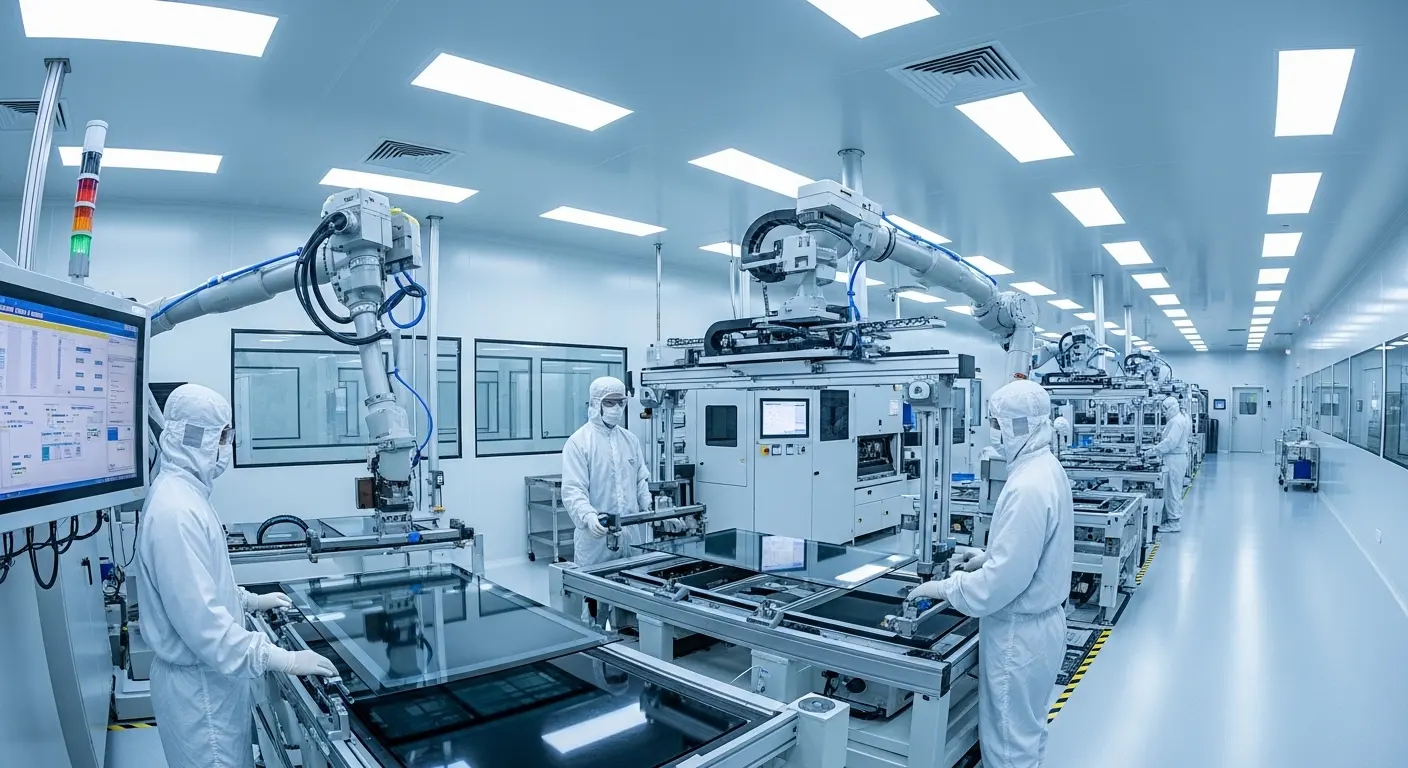
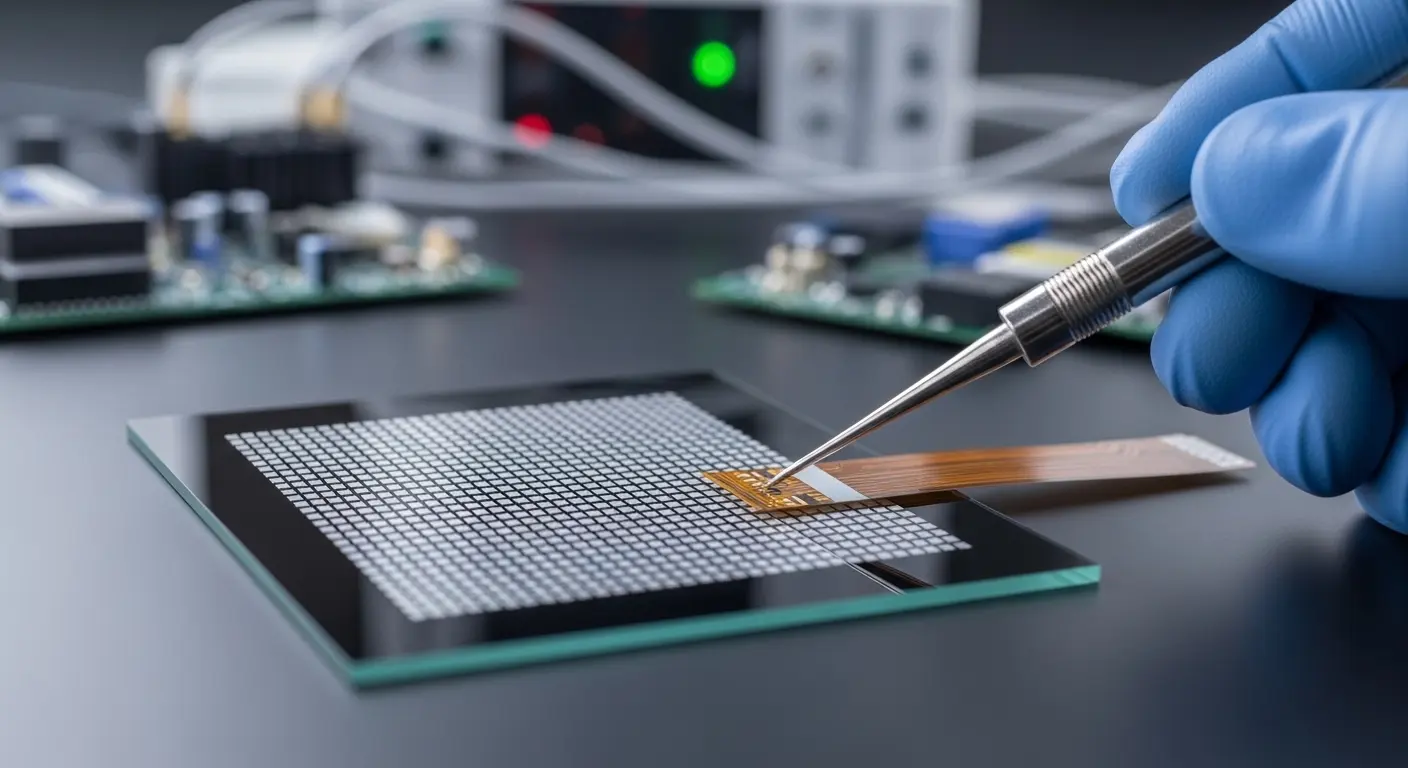
A capacitive touch screen OEM manufacturer is a specialized factory that designs and produces touch-sensitive panels based on the specific design requirements of another company. These manufacturers handle everything from the initial glass cutting and sensor etching to the final integration of the controller IC and cover lens.
Working with a dedicated capacitive touch screen manufacturer allows brands to leverage factory-direct pricing and advanced production cleanrooms. Unlike off-the-shelf distributors, an OEM partner can modify every layer of the touch stack. This includes the thickness of the cover glass, the sensitivity of the sensor film, and the specific surface treatments required for your operational environment.
How Do You Choose the Best Capacitive Touch Screen OEM Manufacturer?
To choose the best capacitive touch screen OEM manufacturer, you must evaluate their cleanroom standards, customization capabilities, and technical support for IC integration. Look for a partner that offers a "one-stop" solution, encompassing optical bonding, surface coatings like AG/AR/AF, and rigorous environmental testing.
When I visited our production floor last month, I was reminded of how vital the "Yellow Light" process is for sensor etching. A top-tier manufacturer should maintain at least a Class 1,000 cleanroom for bonding and a Class 100 area for critical sensor assembly. If a factory cannot provide data on their dust-free environment, they likely cannot guarantee long-term optical clarity.
Essential Selection Criteria
- Technical Certifications: Ensure the factory holds ISO 9001 and IATF 16949 (for automotive) certifications.
- Material Quality: Ask about the source of their glass (e.g., Gorilla Glass, Dragontrail, or AGC).
- In-House Capabilities: A factory that does its own silk-screening and optical bonding reduces lead times significantly.
- R&D Support: Your partner should assist in fine-tuning the firmware to ensure the screen works through thick gloves or water spray.
What are the Benefits of Working with a Direct Touch Screen Manufacturer?
The primary benefits of working with a direct touch screen manufacturer are lower unit costs, faster prototyping, and direct access to engineering staff for firmware tuning. By removing the middleman, you gain full transparency into the supply chain and can ensure the longevity of your components for 5-10 year product lifecycles.
Tip: Always request a "Golden Sample" during the NPI (New Product Introduction) phase. This sample serves as the quality benchmark for all future mass-production runs.
In our analysis of industrial client projects, we found that top capacitive touch screen suppliers who handle their own bonding reduce delamination issues by up to 15% in high-heat environments. Direct communication with factory engineers also means that if a firmware bug appears during field testing, a patch can be developed in hours rather than weeks.
How Does the OEM Manufacturing Process Work for Custom Touch Panels?
The OEM manufacturing process for custom touch panels begins with a design review, followed by sensor layout engineering, glass fabrication, and multi-layer lamination. After assembly, the manufacturer integrates the controller IC and performs a "burn-in" test to ensure the hardware remains stable under thermal stress.
Customization is the heartbeat of the OEM model. If your application requires a unique shape or specialized features, you should consult an expert in capacitive touch custom screen design. The process usually follows these milestones:
- Drawing Approval: Finalizing the mechanical dimensions and tail (FPC) exit point.
- Tooling Creation: Developing the masks for etching and silk-screening.
- Pilot Run: Producing a small batch (usually 5-20 pieces) for functional verification.
- Mass Production: Scaling to thousands of units once the pilot run passes all QA checks.
What Technical Specifications Matter Most in Capacitive Touch Panels?
The most important technical specifications in capacitive touch panels are optical transmission, touch point count, signal-to-noise ratio (SNR), and surface hardness. High-quality PCAP screens should offer at least 85% transparency and a 7H or 9H Mohs hardness rating to resist scratching in rugged environments.
| Specification | Industrial Standard | Premium OEM Grade |
| Transparency | >82% | >91% (with Optical Bonding) |
| Surface Hardness | 6H | 9H (Chemical Strengthened) |
| Operating Temp | -10°C to 60°C | -30°C to 85°C |
| Touch Points | 5 Points | 10+ Points with Palm Rejection |
| Interface Type | USB / I2C | High-Speed I2C / HID USB |
Data suggests that global PCAP shipments will grow by [Placeholder: 12.5%] annually through 2028. This growth is driven by the demand for higher SNR ratings, which allow screens to function flawlessly near high-voltage industrial machinery.
Which Capacitive Touch Controller IC Brands Should You Use?
You should use capacitive touch controller IC brands like EETI, Ilitek, Goodix, or FocalTech depending on your balance of cost and performance requirements. For industrial and medical devices where noise immunity is paramount, EETI and Ilitek are the industry favorites due to their robust firmware algorithms.
Understanding the capacitive touch controller IC brands is vital because the IC is the "brain" of the touch screen. It interprets raw electrical signals into digital coordinates. If you are designing a rugged outdoor kiosk, you need a controller that can distinguish between a human finger and a rain droplet.
- EETI: Known for high-end industrial stability and excellent water-resistance tuning.
- Ilitek: Offers a fantastic balance of performance and price for mid-market devices.
- Goodix: Widely used in consumer electronics for ultra-thin profiles.
Why is Optical Bonding Critical for Projected Capacitive Touchscreen Suppliers?
Optical bonding is critical for projected capacitive touchscreen suppliers because it eliminates the air gap between the touch panel and the LCD, reducing internal reflections and improving sunlight readability. This process involves filling the gap with an optically clear adhesive (OCA) or liquid resin (OCR), which also increases the mechanical strength of the display.
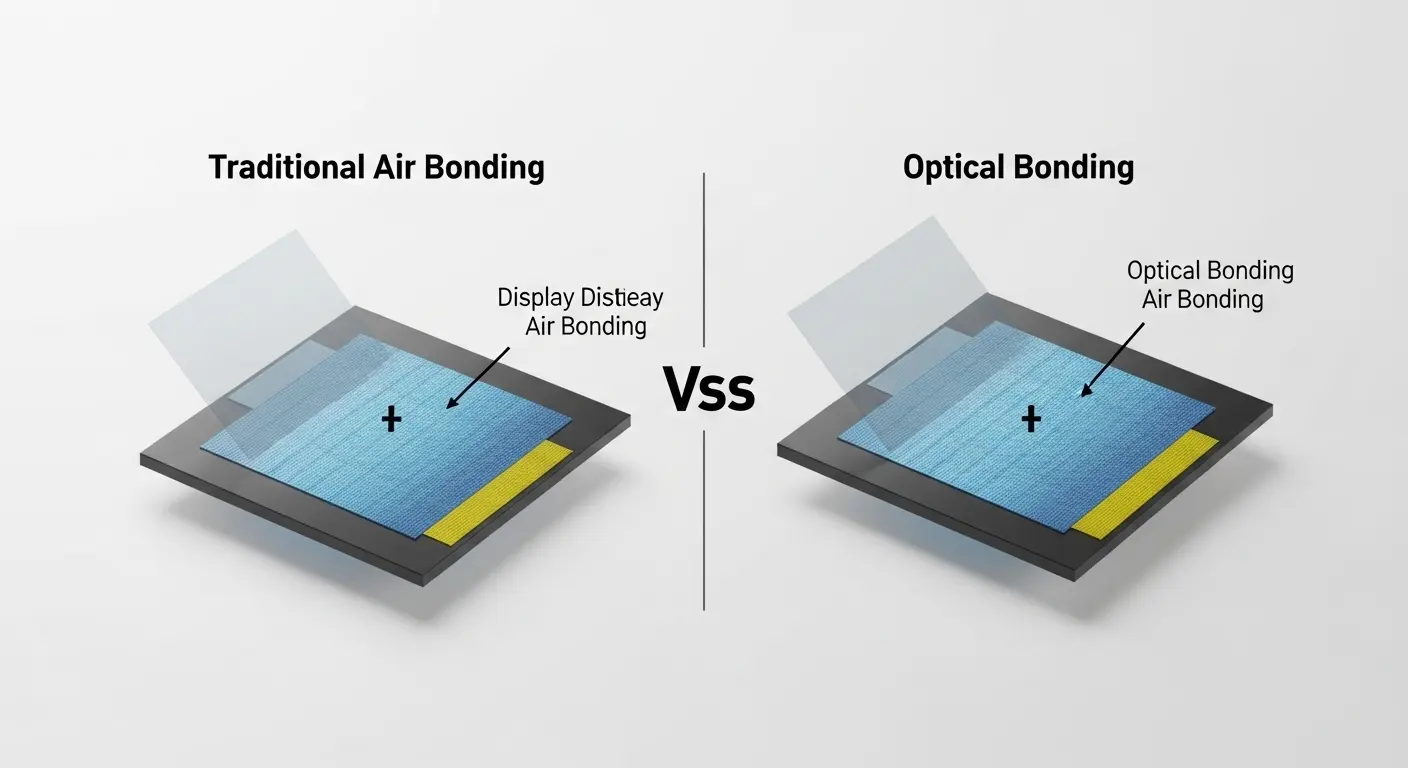
When sourcing from projected capacitive touchscreen suppliers, ask if they perform air bonding or optical bonding. In my experience, air bonding is sufficient for indoor, low-impact use. However, for any device used in direct sunlight or vibration-heavy environments, optical bonding is non-negotiable. It prevents condensation between layers and makes the display appear more vibrant.
How Do Capacitive Touch Screen OEM Manufacturers Ensure Quality?
Capacitive touch screen OEM manufacturers ensure quality through a combination of automated optical inspection (AOI), electrical testing of every FPC trace, and environmental stress screening (ESS). A "zero-pixel-defect" policy and strict adhesion tests (like the cross-hatch tape test) are standard practices for high-reliability manufacturers.
Warning: Be wary of manufacturers that only offer "batch testing." For mission-critical electronics, 100% of the units must undergo functional testing before they leave the factory gate.
At WANTY, we implement a multi-stage QA process:
- Incoming Material Inspection: Checking the flatness and purity of raw glass sheets.
- In-Process Testing: Verifying sensor resistance after etching.
- Final Functional Test: Testing 10 points of touch and gesture recognition on every finished panel.
- Aging Test: Running the screens for 24-48 hours in a high-temperature chamber to catch early-life failures.
What are the Latest Trends in Capacitive Touch Screen Manufacturing?
The latest trends in capacitive touch screen manufacturing include the integration of haptic feedback, ultra-thick cover glass support (up to 10mm), and the rise of curved PCAP panels. Additionally, "In-Cell" and "On-Cell" technologies are moving from smartphones into larger industrial displays to create thinner, lighter interfaces.
Market research indicates that the industrial touch screen market value will reach approximately [Placeholder: $XX Billion] by 2027. This shift is pushing manufacturers to develop "Antimicrobial" coatings and "Smart High-Z" sensors that work through thick welding gloves. If you are planning a product for 2026 and beyond, ensure your OEM partner is already experimenting with these technologies.
How to Successfully Onboard a New OEM Touch Screen Partner?
To successfully onboard a new OEM touch screen partner, start with a detailed RFQ (Request for Quote) that includes your mechanical files, environmental constraints, and projected annual volumes. Establish a clear communication channel with a dedicated project manager to handle the iterative tuning of the touch controller firmware.
- Technical Discovery: Share your "User Story"—who uses the device and where?
- Feasibility Study: Let the factory engineers suggest the best glass-to-sensor ratio.
- Prototyping: Order a small batch to test integration with your specific LCD and housing.
- Firmware Optimization: Fine-tune the IC settings for your specific OS (Windows, Linux, or Android).
Final Thoughts on Finding a Manufacturing Partner
Selecting the right capacitive touch screen OEM manufacturer is the foundation of a successful hardware product. By focusing on technical transparency, cleanroom standards, and IC expertise, you ensure that your end-users enjoy a seamless, frustration-free interaction with your technology. Whether you need a standard industrial panel or a fully custom curved interface, the right factory partner will make the difference between a prototype and a market-leading product.
Related Topics

Industrial Touch Display Technology Trends in the Era of Industry 4.0
Aug-07-2026

Touch Panel Selection Guide for Industrial, Outdoor, and Commercial Applications
Aug-07-2026

How to Choose the Right Touch Display Solution for Your Project
Aug-07-2026

How to Choose an Industrial Capacitive Touch Screen: 2026 Guide
Aug-07-2026
Get a Free Quote
✔ 16 Years Manufacture Service ★★★★★
✔ 3 Technical Experts And 52+ Project Engineers Will Assiste You
✔ Wanty Employs Over 52 Engineers, Many Of Whom Come From Leading Tft Lcd Module Companies Such As Tianma And Boe-Varitronix. Each Core Team Member Brings 15 Years Of Industry Experience.
✔ If you would like more information about our products and services, please contact us. Whether you need a standard solution or a customized one, we are here to meet your needs.
✔ Please complete the form below, and the selected location will contact you promptly. Thank you for visiting, and have a great day!
